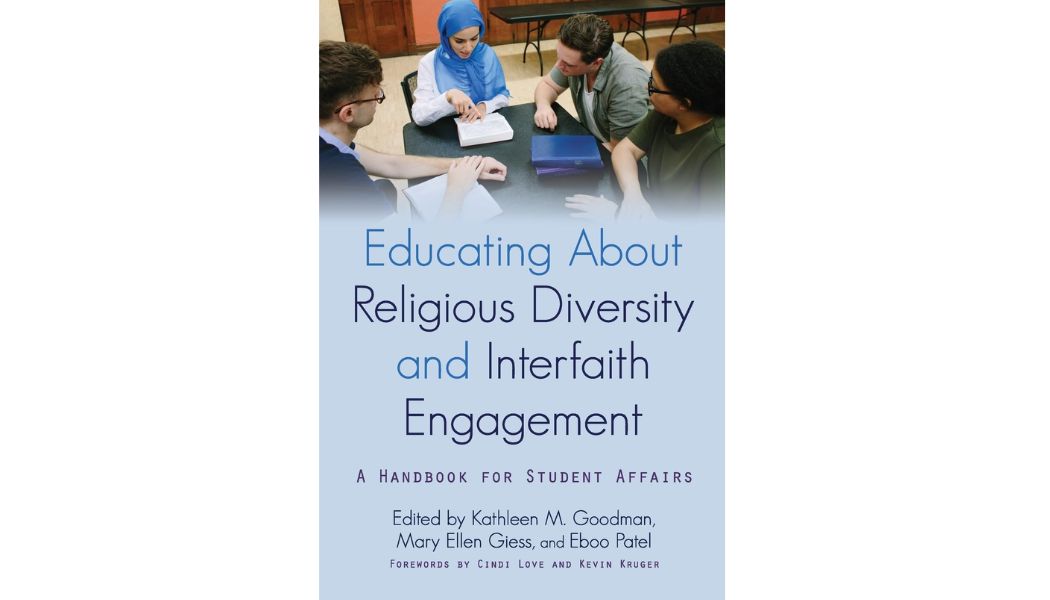
Edited by K. M. Goodman, M. E. Giess, & E. Patel
Stylus Publishing (2019)
Paperback, 324 pages
Reviewed by KIMBERLY DUNKER
This book is a great introduction on how the faculty member in higher education can engage their students who come to school practicing a variety of faiths. Part one of the book outlines how the educator can prepare to engage in interfaith activities. Educators need to become involved in interfaith programming to understand how students view freedom of speech and opportunities to discuss religious, spiritual, and secular opinions. If done civilly and in a supportive environment, it is an opportunity for the faculty to learn from their students. We often make assumptions about religious values, beliefs, and behaviors and how they affect our own identity. Still, we must encourage our students to be confident in their own secular identity so that we can have interfaith dialogues and embrace open discussion. In addition, the campus climate must be evaluated in terms of students’ perceptions of the tension among, discrimination toward, and support for students who have different religious and philosophical identities. Educators can creatively embed interfaith experiences into existing programs and spaces such as commencement and convocation. Furthermore, openly discussing worldview identity during orientation and residential programs while incorporating reflection questions into community service opportunities will challenge students to connect their service work to personal values.
Interfaith cooperation begins with the assumption that, when bringing together individuals of different religious and philosophical perspectives, real disagreements, tensions, and connections regarding the meaning of justice will emerge. Interfaith cooperation also assumes these are genuine opportunities to build relationships based on mutual respect, shared values, and commitment to common action. Respect for diverse religious and philosophical identities means that individuals have a right to form their own religious or worldview identity and a right to express that identity. In addition, those identities should be reasonably accommodated, which means creating adequate space for observing various campus practices from all religions and world views. Ultimately, respect for identity entails affirmation and accommodation.
The second part of the book moves into teaching ideas for student affairs faculty. This begins with developing courses that engage spirituality, religion, and secularity with the goal of inspiring educators to create opportunities for people to practice interacting across controversial differences. Spirituality, religion, and secularity require discussions about how we view issues close to our hearts with perspectives that may vastly differ from those within the student body. When we explore those controversies in a classroom setting, it increases the possibility of engaging differences productively, providing opportunities to strengthen the skills for engaging across differences. As leaders in higher education, we must work with our faculty colleagues on curriculum changes to become an advocate for the inclusion of spirituality, religious diversity, and interfaith engagement in courses across the curriculum and explain the benefits of inclusion to our students. Additionally, we must work individually with faculty colleagues to help them to include in their courses resources, assignments, and other activities that include faith and spirituality. Lastly, we must assess the student learning in our courses relative to faith and spirituality. We can collect information from current and post-graduate students about how issues of religion, spirituality, and faith are relevant to their work in higher education and determine whether integrating these topics is effective in the curriculum.
The final section of the book reveals strategies and activities for educators to practice and how these strategies can be the platform to increase awareness, engage with religious diversity, and build interfaith leadership on college campuses. As a leader in higher education, I found this book to be an asset as I think about ways to engage my students and create a climate that promotes collegial discussions around religious diversity and interfaith collaboration.
Dr. Kimberly Dunker is currently the dean of nursing and health science at Pacific Union College. By leveraging interdisciplinary perspectives and incorporating elements of transformative leadership, emotional intelligence, and ethical decision-making, she aims to cultivate a new generation of nurse leaders who are equipped to navigate the complexities of the academic environment and drive positive change.