
Bordes Henry Saturné, on behalf of the Journal of Applied Christian Leadership: Dr. Bietz, how did you become president of Southern Adventist University (SAU)?
Gordon Bietz: In 1997, the president of SAU left. I was on the board of trustees as the pastor of the Collegedale church, and I was asked to serve on the search committee as they sought a new president for the university. At one of the early meetings, my name was put on the list of potential candidates, and so I resigned from the committee. The committee elected me to be president. A strength I brought to the university was that my wife already worked there as the receptionist in the mornings. She was in a job that didn’t threaten anyone and that helped me provide a friendly welcoming atmosphere in the administrative building.
JACL: What was your vision for Southern Adventist University? Has that vision evolved over the years?
GB: I did not have an academic background. All of my ministry had been on the ecclesiastical side of the church, and I did not come to the position with a vision. When asked at one of the first university senate meetings about my vision, I redirected the question to the senate. I wanted to determine the vision from the faculty and staff rather than bring my vision.
JACL: How did you develop your strategic plan? What was your main focus for that plan?
GB: We followed the Spiritual Master Planning and Assessment of the NAD and had an on-campus team that worked on spiritual planning.
JACL: According to Selingo, Chheng, and Clark (2017), a university president should be an academic and intellectual leader, a storyteller, a strategist, and a communicator. Could that be a fair description of your presidency?
GB: I would say storyteller and communicator. It is not that I was not intellectual, but my previous intellectual work was in preaching. I also hired a person to work on strategic planning.
At the very beginning, because of my lack of experience in higher education, I hired a consultant that met with me and helped me understand the academic world.
JACL: What difference did you make in the area of academic affairs?
GB: I hired a good academic dean.
JACL: What did you do to improve the quality of education on campus? Was that effective?
GB: I created an atmosphere that focused on quality, as well as seeking to maintain a proper ratio between the staff and academic side of the campus. Someone could look up graduation rates etc., but I don’t know that information.
JACL: What was your strategy to increase enrollment at Southern?
GB: Creating a welcoming environment and maintaining the reputation of a conservative school. I worked closely with the marketing department.
JACL: Did you have a strategy to improve student retention and graduation rates?
GB: I hired a consultant who worked with faculty and staff to create strategies and programs to assist students toward graduation. I don’t recall all the initiatives, but things such as counseling, an intervention committee that followed up on faculty concerns about at-risk students, etc. These were not really my ideas, but they flowed from faculty and staff.
JACL: What did you do to encourage research, publications, and scholarship on campus?
GB: We provided funds and would highlight professors who accomplished special things, but I don’t recall any coordinated effort that I initiated.
JACL: How did your leadership influence student life on campus?
GB: This area was one of the more impactful areas, illustrated by the fact that the institution named the new Student Life Center after me. I attended intramural games, some student birthday parties, ate in the cafeteria with students, helped students carry luggage into the dorms at the beginning of the school year, did “walk-around management,” participated in a variety of student skits, etc.
JACL: What did you do to support the health and work/life balance of campus employees?
GB: We had an annual time for all employees to get free health testing, with a bonus gift for participating. At the event in the gymnasium, blood was drawn and various tests were given. I personally was a regular user of the health center on campus.
JACL: What did you do to enhance spiritual life on campus?
GB: The most important thing was to be a spiritual person. Beyond that, we had a spiritual master plan. I chaired the NAD Commission on Spiritual Master Planning and Assessment that wrote guidelines for developing the spiritual master plan for a campus, and I supported the work of our spiritual life committee.
JACL: What was the role of personal devotion (or personal spirituality in general) in your life when you were president?
GB: It is interesting. Because I came to the position as a conference president and a pastor, I think there was the assumption of spirituality. As I look closely at myself, I realize that when I was a pastor, the demands of weekly sermons forced a level of personal devotion and study that I neglected when the demands of administration confronted me. I think that was a weakness of my leadership.
JACL: How did you leverage technology to optimize individual and institutional performance?
GB: I am a HAM radio operator and have always been intrigued by technology. Thus, I personally used technology and understood the importance of it. I encouraged our transition to a new ERP system, even though it caused a lot of anxiety among a number of campus employees who were not inclined to change.
JACL: How did you work with the board?
GB: I was engaged as the board secretary and did fundraising with the members. On one occasion, I had a board member who sought to have a faculty member fired, or at least disciplined. I had lunch with him and told him I was the only person that he should talk about firing and that it was not a board member’s job to deal with individual faculty members. We maintained a good relationship, and I think he got the picture of the board’s responsibilities. Later, we developed a more robust board manual. I had a good relationship with the members of the board. When we had an enrollment spurt one year, I asked each of the conferences to put in an amount of money so we could push forward on housing construction.
JACL: What could be done to ensure that the board of trustees are more effective in the fulfillment of their responsibilities?
GB: First, it would be good to hire the Association of Governing Boards to do workshops for the boards. In addition, make sure the onboarding process requires significant time to make members acquainted with their responsibilities. Having a clear outline in the board of trustee’s handbook of board member responsibilities would also ensure that everyone is on the same page.
JACL: How often were you formally evaluated by the board of trustees? What were some of the commendations and recommendations?
GB: It was only in my later years that I had formal evaluations—and that was probably because I was pushed by the Southern Association of Schools and Colleges (SACS, our accrediting association) to do so. The results tended
to be general without any specific recommendations and some general commendations.
JACL: Did you revise the students’ handbook or the employees’ handbook? Why or why not?
GB: The student handbook was under constant review, and changes related to PDA, clothing, etc. were slowly liberalized. The HR department would suggest various changes to the employee handbook, but I don’t recall any significant ones. Much of the work in my later years revolved around LGBTQ+ issues and how to express God’s love for all and our love for all while maintaining commitment to conservative attitudes about sexual orientation.
JACL: How did you provide or support professional development for yourself, your faculty, and your staff?
GB: We had standard policies for continuing education—more for faculty than staff.
JACL: What did you do to encourage faculty engagement on campus?
GB: During a few years, we provided free lunch for any faculty that would eat in the cafeteria, and we encouraged them to eat with students. I modeled engagement with students, personally.
JACL: What did you do to reward those who were doing an exceptional job?
GB: At registration one time, I gave a few students an amount of money and told them to give it to a faculty member who they thought was doing a good job. However, other than personal notes of appreciation to faculty, I don’t recall other things that I did. I did call (for a time) or email all faculty on their birthday to express appreciation for their work.
JACL: How did you hold your team accountable for any lack of satisfactory performance?
GB: I imagine this was my weakest area. I was not good at holding people accountable. I assumed everyone’s motivation and intentions. Accountabilities were noted and reviewed in a committee context where assignments were given and fulfilled/not fulfilled.
JACL: What was your contribution as president in the area of facilities?
GB: I believe that how you care for the buildings and build new ones makes a significant statement as to how you value the people who come to the institution. We had an extraordinarily strong plant services department that I gave staunch support to. I tried to take a day off in the summer and work with the various departments. I would also take time off to work with the cleaning department cleaning toilets, etc. to show my support for their important work. I worked closely with the associate VP for finance that oversaw facilities and encouraged their work. During my time, we renovated multiple buildings and built a few new ones.
JACL: How did you navigate the financial challenges?
GB: The financial challenges are a bit less when you have growth in enrollment, and during most of my 19 years, there was modest growth. I worked closely with the CFO on the budget. One time when we had a good enrollment, I gave a bonus to every employee so they could see the impact their work had on the institution’s bottom line.
JACL: Tell us about a serious discipline problem that you had to address. How did you approach it and what was the outcome?
GB: We had an employee who was accused of sexual harassment. It went through the regular processes of review, and a recommendation for termination was made. In that instance, I overturned the recommendation based on my understanding of the situation. On another occasion, I recall receiving a report from a committee that reviewed a discipline decision that I had made, and I yielded to their judgment to overturn my decision. In the end, I sought to gather a lot of input and information about any decision. I tend to be very consensual in my decision-making. That was one reason that one board member initially had objected to my being hired as president—because they didn’t think I could make tough decisions.
JACL: Was the university caught in any litigation under your tenure? If yes, could you summarize the case and its outcome?
GB: There were a variety of litigations. Working with the General Conference legal department, we simply settled (by payment) the cases out of court. If I were to do it over again, I would have fought some of the litigations based on principle, but it was easier to just pay. On two occasions, a faculty member was moved from one area of responsibility to another. One faculty member didn’t like the new assignment, and I paid a generous termination. Another was demoted from department head and claimed discrimination; in that case, I also paid a generous termination.
JACL: What was hardest situation/greatest disaster on campus while you were president?
GB: We had a dormitory fire, and one girl in the dormitory died. It hit the national news, and there was a lot of discussion about how we handled it. I gave a workshop at the SACS annual meeting and at another local university.
JACL: How were your relations with local and national government officials?
GB: I hired a part-time assistant to the president who was an expert at integrating into the community. He frequently went with me to community events and introduced me to a lot of people. On the national level, I participated in the Tennessee Independent College Association and attended various national conventions of CEOs and CFOs.
JACL: How did you reach out to the local community?
GB: I was a member of the Chattanooga Rotary Club, and I was on the board of the Better Business Bureau and the Chattanooga Symphony.
JACL: Please share a funny story about your experience as president.
GB: At the beginning of every school year, different staff and faculty members would help students carry their things into their dorm rooms; we called it “We Haul.” I generally helped with this endeavor. One year, as I finished setting down a box in one room, the parents (not knowing who I was) tried to give me a tip!
JACL: How did your presidency affect your family?
GB: One reason I became president of Southern was because of my family. I was on a career track to become conference president; this job would have required much more travel, and my family was not anxious to be nomadic. They were appreciative of me taking the job at Southern Adventist University and were generally pleased that I took the job.
JACL: During your presidency, with the pressures of the position, were you able to take care of your health? For example, did you maintain regular exercise, proper nutrition, annual physical, visits to the dentist, maintain your mental health, and so on?
GB: While I was at Southern, we built the Hulsey Wellness Center, which I made a practice of using regularly. I also rode my bike and got regular exercise. I received regular physicals, but I didn’t have any mental health problems—at least that I was aware of. The university did provide an executive consultant that I could use for anonymous consultation, but after a few phone calls I determined it was not particularly helpful and did not use it further.
JACL: Did you take your vacation regularly?
GB: One of the great things of the Southern Union was an annual (generally weeklong) summer meeting with the presidents in the union. Families were included, and we always looked forward to this time with families that was funded by the union.
Other than that, I probably didn’t take as much time off as I should have. I was usually in the office during university breaks.
JACL: How do Adventist universities contribute to the mission of the Seventh-day Adventist Church? How can they do that more effectively?
GB: I can think of three ways. First, provide quality employees to the church. Second, faculty, staff, administration, and students should be more involved in community activities and not be isolated. And third, provide many more internship programs for students, as well as pay tuition for those who will commit a few years to church employment after graduation.
JACL: Would you consider the issues associated with diversity a serious threat to the unity of the Southern Adventist University family? Or the unity of the Adventist Church? What would be your suggestions to our church and university leaders to alleviate them?
GB: Yes, we seem to be reflecting the culture around us and have seemingly little tolerance for a diversity of opinions on almost any subject. SAU should model a community of love that encourages robust discussion on controversial topics. It should also provide a national model, given the significant diversity of the Adventist church, on how to handle diversity
issues. We need to highlight the preface to the fundamental beliefs that says,
Revision of these statements may be expected at a General Conference Session when the church is led by the Holy Spirit to a fuller understanding of Bible truth or finds better language in which to express the teachings of God’s Holy Word. (General Conference of Seventh-day Adventists, 2020, p. 2)
If we are open to revising the fundamental beliefs, we should be open to discussing them.
JACL: What are the most critical challenges currently facing Adventist higher education in North America? What could leaders do to mitigate them?
GB:
Challenge 1: Demographic changes are resulting in a lower number of available 18–24-year-old students. Not much can be done about this but to seek to obtain a larger cut of the decreasing pie.
Challenge 2: Secularism is creeping in, so it is imperative to maintain the Adventist culture on campuses. To combat this, more education is needed for faculty and students about the pervasive impact of secularism in the culture on each person and their faith journey. In addition, broad-based discussions are needed—for faculty, staff, students, and administration alike—about the student handbook and how to take a principled approach to lifestyle changes in the culture that impact campus life.
Challenge 3: There seems to be, overall, a lessening of Adventist commitment to a Christian education. To fight against this complacency, Adventist educational institutions must demonstrate through strong marketing the transformational impact that Christian education has on the lives of the students. Another way to bolster commitment to Christian education is for Adventist educational institutions to work with pastors to help them understand its importance.
Challenge 4: Finances are an ever-present challenge. One way to approach financial challenges would be to create pathways to jobs with on-campus training that doesn’t require a degree and is offered at a lower cost.
Challenge 5: Many employers are decreasing demand for the four-year degree with all the general education requirements; additionally, there are alternative means to well-compensated employment. The program that we have started—the workforce development certificates offered by our schools—can bring awareness of our schools to the public.
JACL: What do you think prepared you to be a university president? Looking back, do you think that you were well-prepared for that role?
GB: My father was a conference president when I was born, and he was a model that I followed. I pastored a large church for 13 years on the campus of the university. I had developed my communication and interrelationship skills in that environment. I was a conference president for three years prior to becoming the university president. I brought to the job a large dose of humility because of my lack of experience and thus depended a lot on the people around me.
When I arrived at my office for the first day of work, I was pretty sure I was not prepared and wondered why I had accepted the job—but at the end of the day, it was more about realizing that there were many people around me who had good answers, and I needed to use their expertise and appreciate/support them.
JACL: How did you help to prepare the next generation of leaders to serve the institution? Any leadership succession plan?
GB: This is another area of weakness. The president of Union College who worked with me for many years, indicated that I was her mentor, but I was not good at being intentional about it.
JACL: What could be done in the Adventist system to better prepare future university executives?
GB: My dad retired and conducted leadership workshops with a couple of other leaders, and they went to almost every division. I guess something like that would be good—that doesn’t necessarily require going to get a degree. A good podcast for those who have an interest in assuming leadership would also be helpful. Finally, I think a leadership certificate that demonstrated a certain amount of training, as well as having a mentor relationship with someone in leadership, would help prepare future executives.
JACL: What could be the role of former university presidents in the Adventist system?
GB: There is opportunity to be a mentor to new presidents. I am actually doing that now.
JACL: If you had to give three pieces of advice to a new college/university president, what would you say?
GB:
- Ask more questions than provide answers.
- Have a good sense of humor.
- Practice “walk-around-management.”
- And a bonus one: practice servant leadership. (When my office was refurbished, as a dedication, the administrative leadership washed the feet of the student leaders.)
JACL: What would you consider to be your greatest achievement at Southern Adventist University?
GB: Sustaining and building a living, learning Christian community of love where we sought to emulate the life of Jesus in all our interactions. One year, we gave a pin to all the students at the beginning of the school year that said, “WWJD?” (What would Jesus do?). I spoke at the first Friday chapel of each school year and sought to set that tone.
JACL: What would you do differently if you had that opportunity?
GB: I could have raised more money if I had focused on it more. With the experience I have now, I would be a bit more directive in my leadership.
JACL: Do you have any regrets about your presidency? If yes, would you please share it?
GB: I always think that I could have done some things better. There are decisions I made that I would like to take back, but overall, no regrets. I miss the people and the work even today, and as I look back, I almost wish I had not retired when I did. But it was the right time and the right decision.
JACL: Thank you very much, Dr. Bietz. May the Lord continue to bless you.
Gordon Bietz, DMin, remains the longest-serving president of Southern Adventist University in Tennessee, where he served for 19 years. Under his leadership, the institution enjoyed a steady enrollment growth, an impressive expansion of the facilities, and the addition of several new academic programs. Previously, Bietz served as senior pastor of Collegedale Seventh-day Adventist Church and president of Georgia Cumberland Conference. After his official retirement, he became the North American Division associate director for higher education and director of the Association of Adventist Colleges and Universities, a consortium of 13 Seventh-day Adventist institutions that collaborate on marketing and enrollment projects. He holds degrees from La Sierra University and Andrews University.
Bordes Henry Saturné, PhD, currently serves as chair of the Andrews University School of Leadership in Berrien Springs, MI. An ordained minister, he served in New York as a church pastor, school principal, and conference superintendent of schools. He was vice president of Atlantic Union College in Massachusetts and vice president of Asia-Pacific International University in Thailand. He is a New York state certified school district administrator. His research interests focus on leadership development and the challenges and opportunities unique to faith-based educational institutions.
References
General Conference of Seventh-day Adventists. (2020). 28 fundamental beliefs. https://www.adventist.org/wp-content/uploads/2020/06/ADV-28Beliefs2020.pdf
Selingo, J., Chheng, S., & Clark, C. (2017). Pathways to the university presidency: The future of higher education leadership. Deloitte Insights.
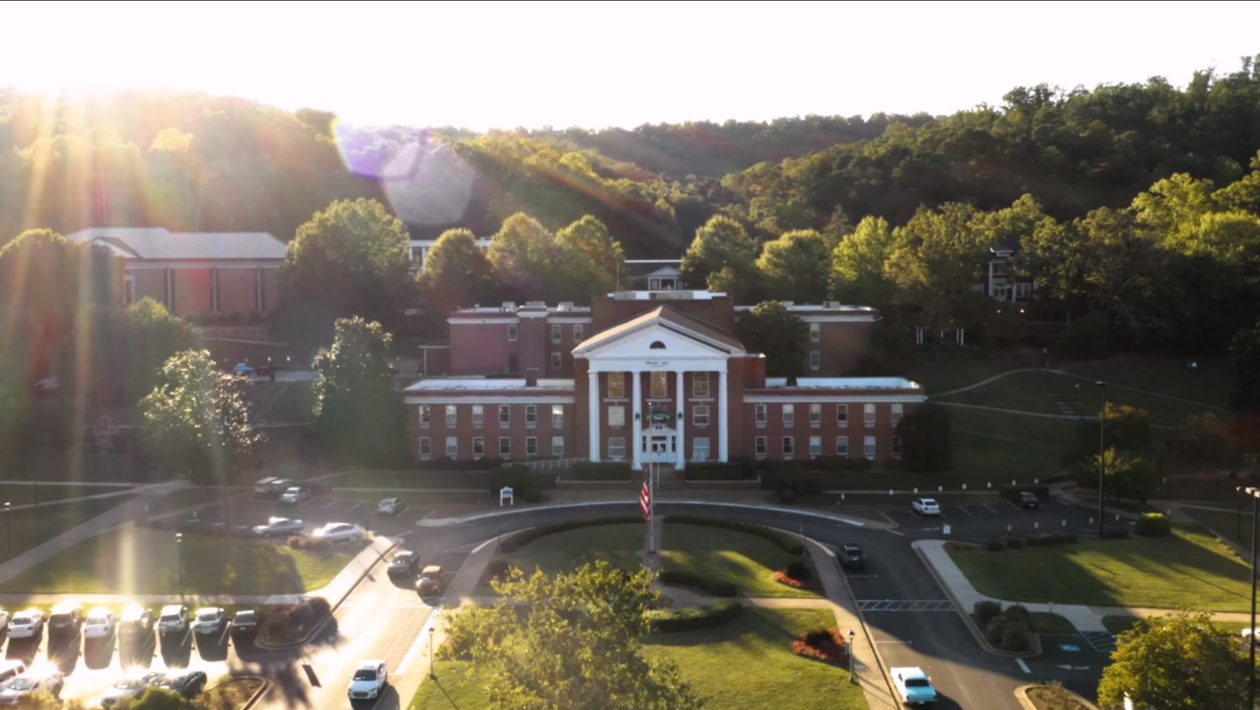
Image courtesy of Southern Adventist University (southern.edu).