“We are facing a perfect storm of a refugee crisis and very little courage or leadership in facing it.” These are the words of William Swing, a career diplomat (Howden, 2016, n.p.). Apparently, he was right. Charmain Mohamed (2017) from Amnesty International put it simply: “World leaders have failed refugees” (n.p.). Roberts, Murphy, and McKee (2016) go as far as to qualify “Europe’s collective failure to address the refugee crisis” as “lamentable” (p. 1). Kamran Abbasi, Kiran Patel, and Fiona Godlee (2015), in their “urgent call for moral leadership,” lament the “fragmentation” of the response to the refugee crisis in Europe, and called for “a fair, humane, and unified approach.” For them, “offering asylum is a minimum standard of civilised society” (Abbasi, Patel, & Godlee, 2015, n.p.). Ruth Simsa, (2017) from the University of Economics in Vienna, mentions the challenges that come to the surface when government officials are missing in action and, consequently, the management of refugee crises are left to volunteers.
Seemingly, one of the reasons for that inertia is the tendency of the national media to depict the refugee in a negative light, often referring to “narratives of security threat and economization” as “an uncontrollable, dehumanised mass waiting to enter the country” (Greussing & Boomgaarden, 2017, pp. 1749, 1756, 1757). “The framing of the Syrian refugee crisis in news sources of different languages reflects processes of reinforcing boundaries” (Ramasubramanian & Miles, 2018, p. 4502).
Fatima (2017) notices a difference in the authorities’ responses at the national and the European Union levels. “Brussels strives to uphold the ideals, on which the Union stands,” but “some national governments appear distrustful” (p. 77). Similarly, one can observe a bifurcation between the lethargy of some institutional churches and the engagement of some of their parishioners. While the religious hierarchy and the clergy remained incapacitated, there was an outpouring of support coming from individual believers (or groups of believers) who felt that it was not an option to remain inactive in the face of such a level of human suffering.
Bob Smietana (2016) reports that, in the American context,
when it comes to helping refugees, Protestant churches and their pastors are often separated by faith and fear….Most pastors say Christians should lend a hand to refugees and foreigners and believe caring for refugees is a privilege. But pastors say their churches are twice as likely to fear refugees as they are to help them. (n.p.)
According to Cekiera (2020, p. 11), Catholics, who constitute the majority of the population in Poland, “despite the vestigial number of refugees and relatively low number of immigrants,…are the least willing to shelter war refugees.” Narkowicz (2018), in her article “Refugees Not Welcome Here,” reports that Polish Catholics are motivated more by nationalism and racism than by the teachings of their church exhorting them to welcome refugees in their country. Kóczián (2022, p. 553) observes a similar situation with the Reformed Church in Hungary, where ethnic identity had an oversized influence on the attitude of even “theologians and church leaders” toward the Muslim refugees. Fatima (2017) observed that “the reluctance on the part of some countries like Hungary, Poland and Austria to accept refugees stems from their fear that the continent may lose its Christian identity and culture” (p. 89).
Stephan Bauman, president of World Relief, stated that “this important research affirms that church leaders broadly agree our faith compels us to care sacrificially for refugees, but also finds that relatively few congregations are actively engaged in doing so” (Neffinger, 2016, n.p.). Several church leaders feel that people of faith should be at the forefront of the humanitarian assistance effort.
The Church has a choice—either to watch on the sidelines or fully engage with the global refugee crisis. How does our faith lead us to action? By seeking direction and wisdom from God, the Church can identify opportunities God has given to us, deciding to be participants in what God is doing in our world. (DiCarlo, 2022, n.p.)
Buda (2016, pg. 145) in the article “The Refugee Crisis and the Ecumenical Response” writes:
Civil society, including faith-based organizations, has a unique and substantial role in responding to humanitarian crises. Better coordination of their actions with those of governments and international agencies, as well as stronger inter-religious cooperation that brings in the voices and capabilities of other faiths, are essential to maximize efforts at ensuring the survival, rights and dignity of refugees and migrants. We call for these intentions to be translated into action, and for the voices and views of refugees and migrants to be heard and taken into account to the maximum extent possible.
However, according to Duvall (2018) “The Episcopal Migration Ministries” response should be “to train, equip, and empower members of faith communities to take a more active role in community organizing, changing public perception of refugees and immigrants, and participating in political advocacy” (n.p.).
Though the response from church leaders and government officials has been disappointing in many aspects, many private citizens have chosen to show compassion to other human beings in distress—often at very high personal cost. In fact, there is plenty of support to assist refugees around the world (80% of the people surveyed, as reported by Mohamed [2017]). In those cases, private citizens, moved by the magnitude of humanitarian distress, took the initiative to “do something” to alleviate the suffering of the refugees. That is illustrated by the story of Christiane Theiss, a Seventh-day Adventist Christian, who initiated and spearheaded the response to the Syrian refugee crisis in the Balkan Peninsula, including Western Turkey and the Greek island of Lesbos, from September 2015 to November 2018.
Under Theiss’s leadership, the initiative provided short-term volunteer opportunities to individuals with medical backgrounds, such as doctors, nurses, midwives, and paramedics. That benevolent project accommodated and supported around 300 international volunteers from Europe, North America, Africa, and Asia. Female volunteers constituted an overwhelming majority, comprising 90–95% of the team members. The organization provided medical services in Lesbos, Greece, from October to December 2015. It operated also in Western Turkey from January 2016 to September 2018, in Serbia from April 2017 to December 2017, and in Bosnia-Herzegovina from April 2018 to November 2018. During that period, about 20,000 patients were treated by the medical volunteers. That number does not include patients who only received medical consumables, the entire camps where people were provided mass treatments for a scabies infestation, or patients referred to secondary health institutions. In addition, the volunteers provided primary care for 6,000 people residing in makeshift camps.
Theiss recalls that she was deeply inspired by the statement of the Apostle Paul recorded in 2 Corinthians 9:6–8:
He who sows sparingly will also reap sparingly, and he who sows bountifully will also reap bountifully. So, let each one gives as he purposes in his heart, not grudgingly or of necessity; for God loves a cheerful giver. And God is able to make all grace abound toward you, that you, always having all sufficiency in all things, may have an abundance for every good work. (NKJV)
Our Heavenly Father is incredibly generous toward His children, and His love and grace are immeasurable. Having experienced this grace and witnessed how lovingly and compassionately Jesus treated her as a sinner, Theiss felt that, as a leader, she could not resist showing the same servant-like behavior toward those around her. Her spiritual conversion gave her the motivation to make the decision to begin that ministry using her own resources. It also empowered her to launch and lead that initiative in humble service to others.
Cooper (2006) also had a great influence on Theiss when he wrote, “We cannot possibly feel the same toward all people, we are asked to act lovingly regardless of the level of affection we may have or may not have toward them” (p. 24). Cooper emphasizes the grace we have freely received in the hope that this experience can transform the way we perceive, evaluate, and relate to others. Cooper reinforced Theiss’s firm belief that seeing others favorably and without prejudice is only possible through encountering God and experiencing genuine conversion. True benevolence and a holistic view can only be found in God.
Phase 1: The Greek Island of Lesbos, August–December 2015
After experiencing a spiritual awakening during a mission trip to the Philippines, Christiane Theiss attended an Adventist-laymen’s Services & Industries (ASI) Convention in Budapest, Hungary, in August 2015. ASI is a “Seventh-day Adventist (Christian) organization of supporting ministries, businesses and professionals who are responding to the call of God to actively share Christ’s love and hope with the world” (Adventist-laymen’s Services & Industries, n.p.). While buying her ticket for the public transportation system at one of the largest train stations in Hungary, Theiss was surprised by the size of the crowd but could not figure out the cause of the high volume of passengers. After the convention, she drove back home to Switzerland via Munich. Just past the Hungarian border, she stopped at
a highway service station in Austria and was puzzled by what she observed there. In the parking area, there were some overloaded private cars from Germany. The passengers looked very different from the drivers.
It was not until she arrived in Zurich four hours later that she learned through the news that the crowds that she had seen in Budapest were refugees from the Middle East and that the first trains, packed with refugees, had started to reach Munich. Over the next few days, and on a daily basis from then on, tens of thousands of refugees came to Munich by train. The media started reporting about the huge wave of migrants into the European Union, but Theiss continued to enjoy her quiet life in cozy Switzerland—until she heard about Aylan, a two-year-old boy from war-torn Syria. That little boy did not reach Europe safely as planned. Instead, he drowned after the dinghy ferrying him from the Turkish West coast to a Greek island capsized. Among the 12 individuals who perished on September 2, 2015, were his mom and his five-year-old brother. A picture of him face down in a red T-shirt and shorts went viral globally. The following day, all major European newspapers showed the picture of the drowned toddler on their front pages, raising worldwide awareness of the influx of some 300,000 refugees from the Middle East in the Aegean Sea since the beginning of that year.
That was the moment when Theiss could no longer stay still. This moment came only a few days after she had returned from a mission trip to the Philippines. During her time there, while preaching, Theiss had a powerful spiritual experience that strengthened her resolve and reshaped her view of the way she, as a leader, would relate to other people. The emergence of the refugee crisis became an answer to her prayers—a God-given opportunity for her to develop and practice her new understanding of leadership. Thus, she wholeheartedly embraced the call and took a leap of faith, not even knowing if she would find a place in Greece to provide medical assistance for the refugees or if she would need to move further east.
Together with her best friend, an electrical engineer and finance executive, she decided to set off on a scouting tour along the so-called “Balkan Route” and to the Greek islands of Chios and Lesbos. At the ASI Europe Convention in Budapest, between August 26–29, 2015, a potential donor had approached the Board of ASI Europe and offered financial support to provide medical assistance for the refugees. Theiss shared her plans with the ASI Europe executive committee. She was given the assignment to explore the possibilities and examine potential places where medical services could be provided. During that fact-finding trip, she identified Lesbos as a critical location affected by the migration crisis. It was determined that it was an ideal site to deploy a potential medical team supported by ASI Europe.
During that trip, Theiss and her companion engaged in negotiations with various NGOs specialized in providing food and clothing to refugees. The goal was to secure a strategic location on the beach situated between these organizations’ bases and the location where these boats from the Republic of Turkey were unloading the refugees. The findings were presented to ASI Europe’s Executive Committee, which then entrusted Theiss and her companion with the responsibility to establish a support team and manage the delivery of medical services to the refugees on the Greek island of Lesbos.
As soon as they returned from their reconnaissance tour, Theiss and her companion started planning and executing that project on the Greek island of Lesbos. The work in Skala Sikamineas on Lesbos was directly connected with the arrival of the refugees carried by the rubber boats. Sometimes, up to 10 boats would arrive in a single day, each one carrying as many as 50 refugees. The arrivals occurred around the clock, necessitating a continuous presence and response.
Within just 10 days of the fact-finding mission, the team commenced its operation as AdventistHelp. They successfully arranged for the transfer of a bus on a ferry boat from Brașov, Romania, located 640 miles away. That vehicle, generously lent by ASI Romania, was originally equipped as a mobile Health Expo. In addition, the team purchased its first batch of medical supplies, drugs, and basic medical equipment and loaded them onto the vehicle.
The team had two medical volunteers, a German doctor and a Danish medical student. The operation steadily expanded over the following weeks. All medical volunteers, regardless of their organizational affiliation, were welcome to join the AdventistHelp effort. For about three months, the team diligently ran this impromptu operation, providing medical assistance to those in need. This involved mobilizing volunteers through their international network within the Seventh-day Adventist Church, leveraging their ASI Europe network, and activating their private connections. The main method to recruit medical volunteers was social media and personal recommendations from former volunteers. Over time, the work became better known, and the leaders were invited to share at various events about their work with the refugees. That publicity also helped the leaders accrue a number of applications from people who wanted to be part of the mission.
It was critical to understand the structures of the emergency response community, as well as the role of large organizations. There was a place and a role for initiatives of all scales, from grassroots ventures to multinational relief organizations. Effective coordination of activities, however, was crucial to avoid duplication and to ensure adequate coverage. From the experience, Theiss learned that strong relationships with all partners on the ground, willingness to assume a volunteer coordinator role to enhance coordination efforts, and effective communication among all stakeholders have the potential to optimize the collective impact. That, in turn, would ensure that the limited resources were utilized effectively, with no overlap of efforts or gaps in assistance for those in need.
Theiss was able to draw on her experience as a human resource professional to manage the process of recruiting and selecting volunteers. She developed a digital recruiting system with a built-in reference and credential check. She conducted online interviews. Further, she developed a volunteer information handbook with important information for each region. She also put in place a detailed onboarding process, which was conducted by field coordinators who had the responsibility to welcome the volunteers on the site, brief them, assign them to their daily tasks, and supervise them.
Theiss implemented a pre-assignment information platform, including some individualized online preparation sessions with incoming field coordinators. She also offered all the field coordinators debriefing via video call, a much-appreciated tool that was used on a daily basis. As a complement to daily debriefings, field coordinators were requested to submit weekly reports with details about the patients and treatments, spending, volunteers, needs, and planning. The field coordinators were trained online in emergency response; they also benefited from other useful trainings organized by partner organizations.
Before carrying out the medical work, Theiss and her team made sure to obtain the approval of the Greek government and the local authorities. That facilitated the collaboration with other agencies on the front lines, the coordination of the operations, and the acquisition of official permits for the work. Further, from the beginning, they worked in partnership with other relief organizations like Médecins Sans Frontières, Prisma/HelpRefugees, Midwife Pilgrim, Mercy Corps, IHA Austria, Aktion Weitblick, Indigo, Refugees Foundation e.V., German Alliance, ADRA Austria und Serbia, and others. (For reason of security, some other partners cannot be named.)
A key factor of AdventistHelp’s success was their multi-cultural approach to community building. The medical volunteers came from six different continents. They had diverse backgrounds, including an Asian beauty queen and a North American mom of 10. Through a Christo-Adventist approach, they were able to integrate and include all the volunteers, bringing them together with a common goal of serving the neediest people.
Effective operations were facilitated by carefully planned logistics. It was important to secure dependable lodging arrangements for the volunteers in strategic and safe locations, where they could also securely store the equipment and the supplies of medicine. They provided adequate funding for vehicles to provide transportation. They made sure that their teams had the necessary medical equipment to perform their tasks. The teams were also entrusted with the responsibility of purchasing medicine. Theiss was amazed to observe how careful and efficient all the volunteers were with the management of the expenses.
The leaders needed to keep the organization as simple as possible and at the same time ensure that the volunteers felt comfortable and supported (Villicana Reyna, 2013). It was critical for volunteers to be provided with the necessary equipment, support services, safe housing, nutritious food, and sufficient free time. The leadership visited the volunteers, accompanying them on field trips as auxiliary staff. They held group events where they
all met, listening to their concerns and needs. They maintained constant communication, fostering a culture and spirit of welcoming, caring, acceptance, and support. Even to this day, some of the volunteers continue to communicate with each other through social media, forging connections despite the fact that they never met in person.
As non-medical workers in the field, Theiss and her friend assumed multiple roles, including acting as drivers, cooks, cleaners, triage officers, purchasers, technicians, and housekeepers. Their primary focus was to ensure the safety and well-being of the volunteers, providing them with ample nutritious food, essential supplies, and medicines. To support the field coordinators, one of the leaders was on site every two weeks at each location for a few days. During their stay at a site, the leaders accompanied the teams, helping out as auxiliary staff or drivers. Further, they organized team events such as larger joint meals with friends from other organizations involved in similar endeavors. Some of these events were organized by Syrian families.
The influx of refugees dramatically decreased in December following an agreement reached between the European Union and the Republic of Turkey. Under this agreement, Turkey agreed to halt migration toward Europe and received in return six billion Euros to improve the refugees’ humanitarian conditions within its borders. Consequently, the ASI Europe Executive committee decided to terminate the operation in Lesbos.
Phase 2: Western Turkey, Serbia, and Bosnia-Herzegovina, January 2016–2018
Those three months on Lesbos had a profound effect on Theiss, and she felt that it was not yet time to return home to her quiet life. So, during the three weeks that she spent home, she launched an intensive marketing campaign on social media, developed a system for recruiting volunteers through social media, established an application and selection process, and set up the necessary technical infrastructure for the mobile clinic. She also implemented a donation system to support their operations.
After that, Theiss embarked on an expedition to explore the shores of the western part of the Republic of Turkey. What Theiss witnessed there left her utterly speechless. On one side, she saw a number of small shops full of life jackets, and on the other side, there were hundreds of people squeezed into makeshift tents made of plastic sheets and grain sacks. These so-called “shelters” were scattered beneath highway bridges, in the middle of a park, inside abandoned factories, and even on harvested fields. It became clear that her mission was far from complete. That led to the idea of a medical volunteer network equipped with mobile units.
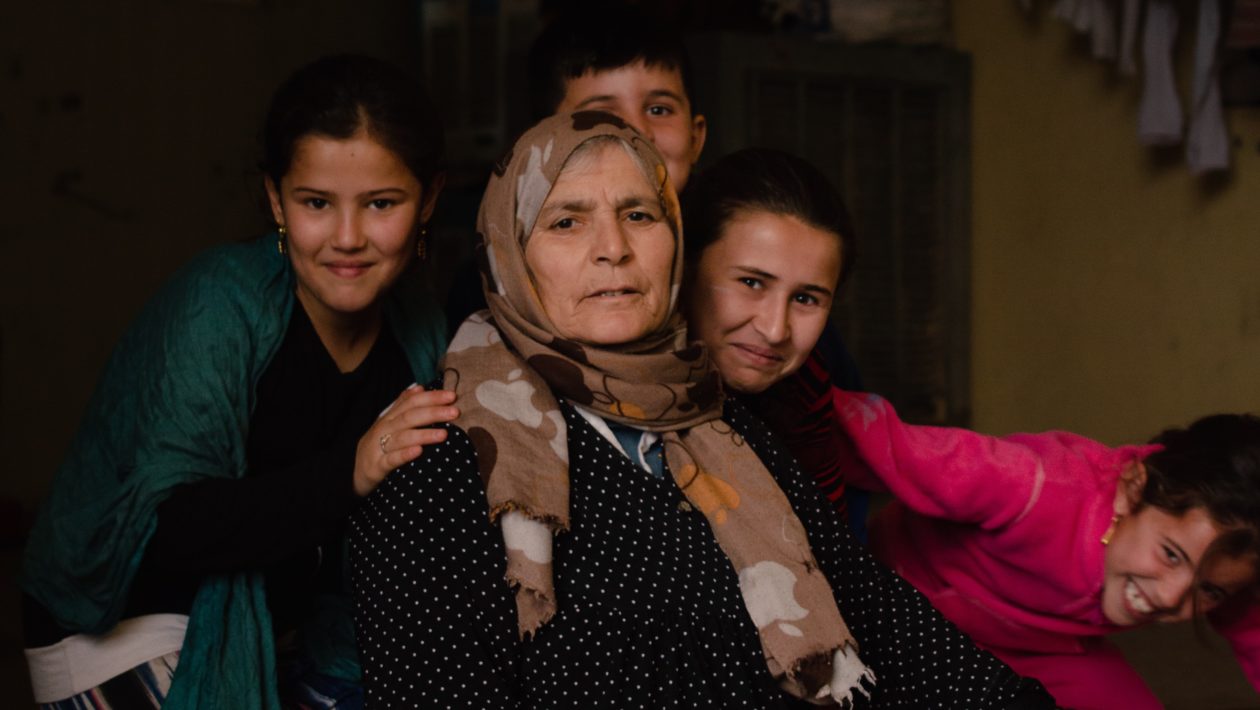
The situation that Theiss encountered in the western part of the Republic of Turkey in late December 2015 was totally different from what she experienced in Lesbos. Here in the Republic of Turkey, she witnessed entire Syrian families living under highway bridges, next to heavy traffic, or in dilapidated houses, attempting to “settle” in these conditions. Most of the individuals living there had no intentions of embarking on a journey to Europe. They had fled war-ravaged Syria and sought refuge in the Republic of Turkey, anticipating a prolonged stay until the situation improved in Syria and they could safely return to their homeland. Many worked as day laborers in the agricultural sector to sustain themselves. The scale of support needed in this context was even greater. It was not an emergency response; it was a long-term endeavor that would entail months, perhaps even years, of dedicated efforts. Thus, the medical volunteer network then expanded its reach to the western regions of the Republic of Turkey, Serbia, and Bosnia-Herzegovina. These teams continued to deliver ad-hoc medical care and to meet the needs of up to 6,000 individuals until November 2018.
In this region, a mobile medical volunteer team was needed, accompanied by translators; this team would regularly visit various locations. A plan was immediately developed, and contacts were established with grassroots organizations on the ground. Within just two days, Theiss was able to send a physician couple to the region. Three weeks after their initial mission in Greece, they were again on the front lines with two new medical volunteers—a physician and a physician assistant from the Netherlands—and there they started a systematic medical outreach work.
In each location, the field coordinators had the responsibility to supervise the operation of the mobile medical units conducting urban and rural home visits. The field coordinators worked for a period of between six months and three years. Onboarding and orientation were provided by the respective field coordinator. All volunteers were interviewed and briefed about their assignments in their target destination. Since the medical volunteers were medical professionals, the team provided them training only on the local situation and appropriate behavior as medical volunteers in a different cultural setting.
In February 2016, to better facilitate the much-needed medical assistance, Theiss and her team founded a small refugee NGO called MedVint. Under Swiss law, it operated without a conventional board of directors. Instead, it followed an alternative governance model. The main donor supporting the initiative received detailed monthly reports that provided comprehensive information on the progress and activities carried out at each location. These reports ensured transparency and allowed the donor to stay well-informed about the impact and effectiveness of their support.
The ministry continued to expand. Initially based near Izmir, Republic of Turkey, the team provided ad hoc medical assistance to approximately 6,000 refugees from the Middle East—primarily from Syria, but also from eastern Turkey. These refugees were scattered across 30 unregistered makeshift camps. Over the course of three years, the team was the only organization providing medical services to the refugee population within a radius of 100 miles in the Greater Izmir area.
In the spring of 2017, Theiss and her team extended their operations to Serbia, where they worked alongside Médecins Sans Frontières (MSF) as the primary healthcare providers for the undocumented refugee population, primarily consisting of young Afghan males aged 16 to 25, in northern Serbia.
From the spring of 2018 until December 2018, this group operated a field clinic in Sarajevo, the capital of Bosnia-Herzegovina. There, they collaborated closely with NGOs specializing in food distribution. In most cases, their partners organized two large food distributions, always approved by the local authorities, in a place that was easily accessible for refugees and migrants—usually a park or a square. This coordination and collaboration ensured the safety of the volunteers and facilitated easier access to those in need.
In total, about 300 volunteers joined the operations in the Balkan Peninsula and Western Turkey. Most of the time, medical volunteers served for a minimum of 10 days and a maximum of three weeks. Everything was planned to ensure a good combination skill. Some of the volunteers had a medical background—medical doctors, nurses, midwives, or paramedics. Others had multilanguage or organizational skills and helped manage the medicine supplies or the patients’ medical records. In addition, others assisted with driving the volunteers to the rotating daily areas of operation. In the Republic of Turkey, the team drove up to 250 miles per day, and in Serbia, up to 150 miles. In addition, volunteer telemedicine consultants were available through video calls to support the staff on the ground. The team worked in cooperation with local medical laboratories for the evaluation of the blood samples that were drawn by the medical volunteers. When
necessary, patients were referred to various clinics for more advanced medical care. In many cases, the team organized transportation to secondary health institutions and covered the hospital costs.
The volunteers intentionally and consistently established partnerships with existing organizations that provided complementary services such as food, clothing, WASH (Water, Sanitation, and Hygiene), teaching children, and recreational activities, and they linked volunteers with these partners. This network of partners allowed the volunteers to settle in more quickly and maintain broader contacts beyond their team; it also enhanced their security in the countries of operation and provided them with a comprehensive understanding of the complexities of relief work. This collaborative approach was gladly accepted, and in some cases, it even led to the development of long-lasting friendships.
Creative collaboration and innovation played an important role in the execution of the project. This became evident when one of the volunteer doctors made a promise to a refugee, offering to manufacture and finance a prosthetic leg through the organization. Although this was beyond the available budget and the scope of the project, the entire team was engaged to find a way to fulfill the promise. And the miracle happened! Within a span of four weeks, the team collectively discovered various approaches and strategies to raise the necessary funds, and they secured the needed resources to deliver the prosthetic leg. Encouraged by this experience, Theiss now leads groups and teams through design thinking to foster creative and innovative solutions as part of her leadership toolkit.
Each time they ended operations in a country, Theiss and her team distributed their supplies of medicine, medical consumables, and small medical devices, and donated their equipment to local physicians or hospitals they had collaborated with. In Serbia, whatever was left was passed on to the local Seventh-day Adventist Church health ministry. The vehicle in Bosnia-Herzegovina was handed over to a partner refugee organization, according to the wishes of the donor.
Not Everything Went Well
One project that didn’t work as well was the endeavor to set up complementary services or activities. For example, Theiss’s team assisted a partner organization in Western Turkey with a large shipment of toys and playground equipment from Germany and Austria for a kindergarten established for refugee children. However, the process of importing and delivering this cargo proved to be nerve-wracking, time-consuming, and exhausting—diverting valuable time and energy from the volunteers. While it was extremely rewarding to witness the immense joy on the children’s faces as they held dolls or toy cars—some for the first time in their lives—it became rapidly obvious that the project was not sustainable.
Additionally, there were isolated instances where individual volunteers, despite receiving thorough briefings, had misconceptions about the nature of the work they would be undertaking. In one particular case, the team had to terminate an assignment within the first few days and provide support for the volunteer to return home. This experience provided a valuable lesson, reminding the leaders that they must ensure better alignment between the volunteer expectations and the reality of the mission on the ground.
The Growth of a Leader
The most significant outcome of this experience was the profound impact it had on Theiss, personally. Engaging in intensive refugee work has made her change her career path, and it has reshaped her priorities in life. In retrospect, Theiss feels that it was a good move to clearly articulate the team’s motivation and commitment from the very beginning. They stated plainly upfront that they were a humanitarian NGO inspired by their Christian faith in action to relieve human suffering. They explained that the network’s objective was to bring relief and recovery to people in crisis, regardless of race, gender, or nationality. They openly shared their belief that aid should be given to anyone in need. Such transparency helped to dispel any suspicions or doubts. Their commitment, motivated by their faith, was recognized as credible and was understood across cultures and regions. It was respected by both religious and non-religious sectors, opening more doors than it closed.
Theiss also recounts that she feels immensely blessed that her soulmate and best friend accompanied her on this transformative journey. Their experiences together remind her of Moses, who had Aaron as his spokesperson and who sought advice from his father-in-law, Jethro, when leadership responsibilities threatened to overwhelm him.
According to Theiss, those who are convinced of God’s calling for a special ministry should pray and trust in the Lord. They should be courageous and respond to the call. Situations may be challenging—especially in emergency situations—but that is exactly the time when there is the most urgent need to spend personal time with the Heavenly Father and to remain in communion with Him. When facing enormous challenges, one should spend time alone with God, engage in heartfelt conversations with Him, and cast upon Him all concerns and worries. This practice has been instrumental to Theiss and has provided her strength, solace, and guidance in the midst of difficulties.
Bordes Henry Saturné, PhD, currently serves as chair of the Andrews University School of Leadership in Berrien Springs, MI. An ordained minister, he served in New York as a church pastor, school principal, and conference superintendent of schools. He was vice president of Atlantic Union College in Massachusetts and vice president of Asia-Pacific International University in Thailand. He is a New York state certified school district administrator. His research interests focus on leadership development and the challenges and opportunities unique to faith-based educational institutions.
Christiane E. Theiss, PhD, is an adjunct professor in Andrews University School of Leadership, president of ASI Europe, and director of people and culture at VisilabGroup SA, Geneva, a retail healthcare provider in Switzerland. Previously, she served as the human resource director for the social department of the city of Zurich, Switzerland.
References
Abbasi, K., Patel, K., & Godlee, F. (2015). Europe’s refugee crisis: An urgent call for moral leadership, British Medical Journal. https://www.ncbi.nlm.nih.gov/pmc/articles/PMC4564068/
Adventist-laymen’s Services & Industries. (n.d.). About. https://asiministries.org/about-asi/
Buda, D. (2016). The refugee crisis and the ecumenical response. Review of Ecumenical Studies Sibiu, 8(1), 140–145.
Cekiera, R. (2020). Anti-refugee attitudes of Polish Catholics and the teaching of the Catholic Church: The surprising paradox and its reasons. International Journal of Religion & Spirituality in Society, 10(4), 11–24.
Cooper, T. D. (2006). Making judgments without being judgmental: Nurturing a clear mind and a generous heart. InterVarsity Press.
DiCarlo, J. (2022). The refugee crisis and the church. Medical Teams International. https://www.medicalteams.org/blog/the-refugee-crisis-and-the-church/
Duvall, A. (2018). Love God, love neighbor: Channeling energy for refugee welcome: how religious communities are responding to the refugee crisis. Berkley Center for Religion, Peace & World Affairs. https://berkleycenter.georgetown.edu/responses/love-god-love-neighbor-channeling-energy-for-refugee-welcome
Fatima, Z. (2017). Syrian refugees in Europe: Responses of the EU and the member states. Journal of European Studies, 33(2), 77–90.
Greussing, E., & Boomgaarden, H. G. (2017) Shifting the refugee narrative? An automated frame analysis of Europe’s 2015 refugee crisis. Journal of Ethnic and Migration Studies, 43(11), 1749–1774. https://doi.org/10.1080/1369183X.2017.1282813
Howden, D. (2016). “Very little courage or leadership in refugee crisis”—Migration chief. The New Humanitarian. https://deeply.thenewhumanitarian.org/refugees/articles/2016/09/21/very-little-courage-or-leadership-in-refugee-crisis-migration-chief
Kóczián, V. (2022). “This nest is for all kinds of birds?” National identity questions in the refugee reception of the Reformed Church in Hungary. Religion, State & Society, 50(5), 553–568. https://doi.org/10.1080/09637494.2022.2154087
Mohamed, C. (2017). World leaders have failed refugees. Can ordinary citizens teach them a lesson? World Economic Forum. https://www.weforum.org/agenda/2017/08/world-leaders-refugee-crisis/
Narkowicz, K. (2018). “Refugees not welcome here.” State, church, and civil society responses to the refugee crisis in Poland. International Journal of Politics, Culture & Society, 31, 357–373. https://doi.org/10.1007/s10767-018-9287-9
Neffinger, V. (2016). Survey finds churches are twice as likely to fear refugees as they are to help them. Christian Headlines. https://www.christianheadlines.com/blog/survey-finds-churches-are-twice-as-likely-to-fear-refugees-as-they-are-to-help-them.html?amp=1
Ramasubramanian, S., & Miles, C. (2018). Framing the Syrian refugee crisis: A comparative analysis of Arabic and English news sources. International Journal of Communication, 12, 4488–4506.
Roberts, B., Murphy, A., & McKee, M. (2016). Europe’s collective failure to address the refugee crisis. Public Health Reviews, 37(1). https://doi.org/10.1186/s40985-016-0015-6
Simsa, R. (2017) Leaving emergency management in the refugee crisis to civil society? The case of Austria. Journal of Applied Security Research, 12(1), 78–95. https://doi.org/10.1080/19361610.2017.1228026
Smietana, B. (2016). Churches twice as likely to fear refugees than to help them. Lifeway Research. https://research.lifeway.com/2016/02/29/churches-twice-as-likely-to-fear-refugees-than-to-help-them/
Villicana Reyna, N. R. (2013). The effect of NGO leadership on volunteer retention (Publication No. 35942680) [Doctoral dissertation, Alliant International University]. ProQuest Dissertations Publishing.