
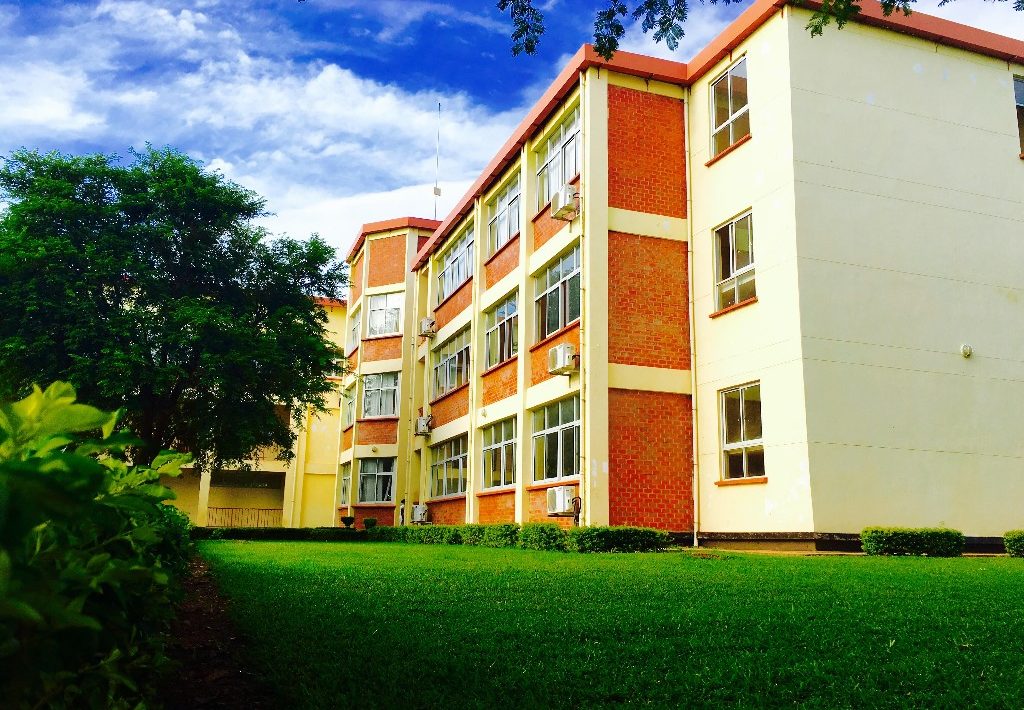
Bordes Henry Saturné, on behalf of the Journal of Applied Christian Leadership: Dr. Mwansa, please introduce our readers to Rusangu University.
Pardon Kandanga Mwansa: Rusangu University, an institution of higher learning founded in 2002 in Zambia, is a faith-based university affiliated with the Adventist Church. Rusangu University is the largest university in Southern Africa-Indian Ocean Division territory and has grown exponentially from 2015 to 2022.
During those seven years, against tremendous odds, the enrollment rose from 300 enrolled per year to over 1,200 enrollment per year. Within those seven years, the university enrollment doubled to reach 3,000 students. Several memoranda of understanding were developed with other institutions to offer specialized programs to the student body.
The institution has extended its accreditation with the Nursing Council of Zambia, the Health Professional Counselors of Zambia, the Higher Education Authority of Zambia, and the Adventist Accreditation Association. Four new dormitories and eight housing units for the faculty were built on campus. A sewage system that provided environmental safety (necessary due to the sudden explosion of enrollment) was another major feature added to the university. Students were actively involved in a thriving prison ministry outreach.
The university, which started with just one location, has grown by expanding its influence, establishing two new campuses located in the two most populous cities in the country of Zambia: Lusaka and Kitwe. These campuses immediately grew, boosting the enrollment of the school and expanding the presence of the university from the bush in Monze to the cities.
JACL: What was your vision for Rusangu?
PKM: The vision for Rusangu University, narrated by the president and captured in different media of communication, included:
- A spiritual campus—a campus where people prepare for eternity.
- A citadel of intellectual knowledge.
- A household name in Zambia because of its works that are known everywhere.
- A beautiful, clean, green campus, free of dust and mud.
- A campus with infrastructures well-built befitting of different schools, operational buildings like a library, cafeteria, and good dwelling residences for students.
- An administration, faculty, and staff team that is committed to the vision and mission of the university.
- A school well equipped with teaching materials for both teachers and students.
- A school whose operations are characterized by systems operations and functions that form a united whole of operations. Decision-making locus are clear and flow seamlessly into other areas of operations.
- A vibrant student body that is committed to the vision and mission of the school.
JACL: How did you develop your strategic plan? What was your main focus for that plan?
PKM: Our focus for our strategic plan included four elements: growth in student enrollment, quality of programs, effective teaching and learning, and student care. Our strategic plan was developed in stages. First, we formed a lead team that did most of the work of collecting data. Consultations were done at a variety of levels with different stakeholders, and approval processes were done through different entities with final approval resting with the governing board of the university. Then, we printed a colorful booklet.
JACL: According to Selingo, Chheng, and Clark (2017), a university president should be an academic and intellectual leader, a storyteller, a strategist, and a communicator. Could that be a fair description of your presidency at Rusangu?
PKM: These characteristics are very true and typical of the leadership of the college president, including my time in that position from 2016–2022. I began my time there with an assembly to address a vision of what Rusangu University could be, using stories of how other universities had “made it” in different locations. I translated those stories into a clear, colorful strategic document called “Vision 2020” in which I identified 16 areas of focus for the university. This document, which was a child of the president but has been developed in consultations with different schools on campus and the university board members, was popularized and literally scattered to as many stakeholders as possible. I then began a strong campaign of implementing and monitoring the progressive results of the implementation.
JACL: What difference did you make in the area of academic affairs?
PKM: The major differences made in academic affairs were several, but the most aggressive one was the affiliation of the health programs with three approving and accrediting bodies, namely, the Nursing Council of Zambia, the Health Professional Counselors of Zambia, and the Higher Education Authority of Zambia. This singular act made the enrollment of students in the School of Health move from 30% of the total enrollment of the school to 70% within four years.
Additionally, the university employed qualified, experienced lecturers in the School of Health by doubling the number of employees in this school from 11 in 2016 to 22 by 2022. This act enabled the school to meet all of the approving criteria for the School of Health and gave confidence to the learners—which resulted in more students enrolled.
The university increased the number of programs in the flourishing School of Health from one to four. With this increase, students with diverse interests were able to enroll in the university.
JACL: What did you do to improve educational quality on campus?
PKM: The first step taken was to convince the board to freeze school fees for the next three years to give students some financial break. This was a departure from the past behavior of increasing fees annually and by any amounts that would balance the budget.
To increase enrollment, management perceived (and guessed correctly) that the trend in the country had changed to employers who were seeking graduates with health majors, not arts. So, the university decided to promote two health programs, namely a Bachelor of Science in nursing and a Bachelor of Science in environmental health. The decision paid off immediately. In 2015, the entire school population was 70% School of Arts (education, theology, etc.), but by the end of 2017, the School of Health had grown to 70%, leaving the other 30% to other schools such as arts and business.
JACL: Did you have a strategy to improve student retention and graduation rates?
PKM: The university created a strong strategy for student retention that included, among other things, improving public relations toward our clients (the students and their parents). We also provided a work program that enabled students who did not have sufficient finances to do both work and study. A fund was put in the budget that provided for at least 150 students who could benefit from such an arrangement. School fees were made competitive with other institutions of higher learning so that the learners were inclined to remain with Rusangu instead of going to other schools on grounds of fees differences.
JACL: What did you do to encourage research, publications, and scholarship on campus?
PKM: Promotion in ranking required that those wanting to be moved into professorship had to publish articles in reputable academic journals. Because of this, many of the faculty attempted to write, even though few articles were accepted for publication. We voted to start our own academic journal but failed due to lack of experienced staff in that area.
We started a moringa farm of about 20 hectares to grow moringa so that we could study its medicinal properties and sell products that came out of the farm. Unfortunately, this project failed due to poor management.
We gave scholarships to at least five of our employees to study abroad or locally in the country. We sourced funding for such scholarships from outside and also supplemented with our local school funds.
JACL: How did your leadership influence student life on campus?
PKM: When I took over this office, I found a very strong top-down decision style of leadership. An example of this was that students had no say, even in the election of their leaders to the student union. University management elected such a person, and generally it was a person who was loyal to administrative desires. But when I came in, I transferred the power of electing the student leadership team to the students themselves, through a well-organized election process. Secondly, when I took over office, I found that all hiring of employees was done by the office of the president. I decided to form a human resources department and appointed an HR leader who became responsible through a search committee for hiring of all employees.
Through the transferring of power from the office of the president to the students and to other branches of the school, such as HR, I feel that my leadership influenced the students as well as the employees positively. Nobody felt that they were hired by the president. They all believed that they were hired by the university because of their merits.
JACL: Did you have the chance to do something to support marginalized groups/population on campus?
PKM: We did not have marginalized groups on campus, as such. We had two disabled students who received specialized treatment as was necessary.
JACL: What did you do to support the health and work/life balance of campus employees?
PKM: I failed to provide a good solution to the health and work life of employees, especially the faculty. We operated two “schools.” One maintained a “regular” schedule and was composed of students who came during the regular three terms in a year. We also had “block students”—those students who worked and who could only attend during school holidays when the regular students were out on holiday. The enrollment was 60/40 ratio of the regular and the block. The challenge with such a program is that professors had no time to rest. The longest they rested in a year was just one week, and that was between the time the regular students left the campus and the block students reported on campus. This situation led to burnout among our faculty and proved to be unhealthy—but we needed the money that such an operation brought.
JACL: What did you do to enhance spiritual life on campus?
PKM: Two major things that we did to enhance spiritual life on campus were to establish and operate a prayer garden and conduct a Week of Spiritual Emphasis (WOSE). The prayer garden became so popular that during the hours the garden was open, there were always students there praying. The WOSE program was also popular because during that week the school would invite good spiritual leaders (i.e., those known in the church) to come and speak to the students. At the end of the week, we always had baptisms into the faith. Our two chaplains, one male and one female, were very active in service to both students and employees.
JACL: How did you leverage technology to optimize individual and institutional performance?
PKM: Technology was one of the major operations of the school, and it proved to be our savior during COVID-19 in that we were able to remain afloat by conducting online classes. As a school, we were offering a bachelor’s degree in information technology. Our school was rated the second best in the country, in both public and private institutions of higher learning, when it came to the use of technology for learning.
JACL: How did you work with the board?
PKM: My work with the university council (university board) was excellent, especially the first seven years. When the council was first composed (the year I began serving as college president), we invited a well-known guru in board management to come and conduct a board management seminar to all council members. Because of this, the board members all knew their work well and thus served well.
The council has five committees through which all agenda items were first processed. Then, an agenda would be drafted based on recommendations from those committees. In this way, all agenda items were carefully thought through. The board met at least twice every year and reviewed all significant matters of the board.
JACL: How often were you formally evaluated by the board of trustees?
PKM: Our board of governance document called for the evaluation of the college president annually, but that never happened. Therefore, I was only evaluated once, and that was in my last year of work. Twenty-five percent of the evaluation was done by board members and 75% by university employees. This was contrary to the governance document that required 100% evaluation by the board of trustees. The evaluation resulted in my being scored at 73%, which fell short of the required 75%, and I lost the job.
JACL: Did you adopt any new policies during your tenure?
PKM: We developed more than 20 policies during my tenure of office, many of them being academic policies. Due to the university’s academic growth, we needed to put a lot of policies in place, and we developed them and processed them for approval through the board. These included policies such as: administering of adjunct professors, ranking policy, remuneration policies based on ranking, independent study policies, human resources policies (since we had no HR when I took over office), election policies for student representatives and clubs, e-learning policies, etc.
JACL: Did you revise the student handbook or the employee handbook? Why or why not?
PKM: We revised both the student handbook and the employee handbook because of the many things we added to both student and employee life. We added the work program for students who needed to make money for school fees and policies for female students when they got pregnant and needed to take a break. We revised the employee handbook when we decided that all support staff were to be employed on contract and not as full-time, regular employees. We also revised the employee handbook when most of our professors did not want to work full time but rather as contract workers who would receive gratuity at the end of their contract.
JACL: How did you provide or support professional development for yourself, your faculty, and your staff?
PKM: Due to the nature of our operations, which required us to operate both regular school program and block students, I, the faculty, and the staff had little time for professional development. As a means of addressing this need, we invited trainers to present on professional growth and conduct professional growth seminars. We hosted two such major meetings conducted by the General Conference and the division office. We also conducted one ourselves at which we studied books like Educating for Eternity by George Knight to ensure that the philosophy of Adventist education was kept alive.
JACL: What did you do to encourage faculty engagement on campus?
PKM: In addition to their teaching load, most faculty were also involved in teaching Sabbath School lessons at church every Sabbath and taking students out for mission programs outside of the school campus. A good number of our teachers also accompanied students when they went for practicals to different hospitals, schools, or institutions.
JACL: What did you do to reward those who were doing an exceptional job?
PKM: We awarded exceptional teachers identified by the office of the provost during our Teacher’s Day. At one point, we gave all our teachers an amount of money in recognition of their work.
JACL: How did you hold your team accountable for any lack of satisfactory performance?
PKM: Promotion through academic ranking, or the lack of it, was the major way by which we awarded excellent performance among our faculty and also held them accountable. Our program, though, I need to say, of operating two schools (regular and block) did not provide much room for quality assessment of the teachers, as they were kept busy throughout the year.
JACL: What is your contribution in the area of facilities?
PKM: Management had to secure approval from the governing board to obtain a loan to build new hostels to respond to the students’ hostel needs.
JACL: How did you navigate the financial challenges?
PKM: We faced two kinds of financial challenges during my time as president. They came as a result of borrowing funds to build four hostel houses for the students, combined with a dwindling of income during the two years of COVID-19. Our challenge from COVID was due to loss of income from the hostels since no students reported to the school hostels. In addition, enrollment went down because some students could not find Internet to continue learning online.
The challenge caused by our borrowing became a reality when we started to pay the money back; we were paying back the loan from operational funds (school fees collected from students). Due to COVID, our operating budget was therefore cut, which caused us financial challenges.
Despite these challenges, we continued to pay from our university reserves, which we had accumulated during the years when we had borrowed. The challenge is that before long we had no reserves at all.
JACL: How did you do with the institutional audits?
PKM: The university was audited five times, starting in 2015 up to 2020 when COVID-19 came and made it hard to have audits. During the 2015 audit, the university got a qualified statement because of non-policy compliance and poor financial record keeping. Management implemented the auditor’s recommendations, and from 2016–2020, the university received clean audit statements.
JACL: Tell us about a serious discipline problem that you had to address—either an employee or student. How did you approach it, and what was the outcome?
PKM: We faced many issues of discipline, but two stand out. We fired a female employee who stole over K2,000,000 of money she collected as cashier at the cafeteria. She took us to court, and the case lasted for three years. At the end of the case, she was convicted and sentenced to prison. Our defense was our disciplinary code, which we followed to the letter. When the case was reviewed, the court found that we followed all the disciplinary procedures and had enough evidence to release her from employment.
We faced a lawsuit from a student who claimed that he was being forced to do religious classes or courses that were not a part of his core subjects for his major program. The student wanted to graduate because he had other things he wanted to do. As a result, he asked the school to graduate him before he had met all the requirements of his program, especially religious classes such as “spiritual formation.” These classes were part of the classes that he had signed up for as part of his degree in social work. But when he realized that he had no time to do them, he claimed that he was being forced to take religious classes that were not necessary or even part of the core subjects.
The matter attracted public attention because it appeared that we were trying to force him to take religious subjects, contrary to personal conviction. The case went to court, but when he realized that he was not going to win, he withdrew the matter from court. What helped us to win the case is the contract that he had signed at the beginning of his social work program.
JACL: Was the university involved in any litigation under your tenure? If yes, could you summarize the case and its outcome?
PKM: We had three lawsuits, and we won all three. Nineteen employees sued us for unlawful dismissal, but they lost in the courts of law. As I discussed before, we had a worker take us to court for being fired by the school for embezzling funds, but she lost. We were taken to court by one approving body for apparently offering a program for which we had no approval, but we won the case.
JACL: I know you briefly discussed this before, but can you tell us more about the impact of COVID-19 on the institution? How did you handle that crisis?
PKM: COVID-19 impacted us for two years from two angles. First, our enrollment went down due to the fact that students did not report for school physically but were required to enroll on e-learning. The challenge is that many of them did not have Internet in the rural areas where they stayed, and even for those who had, it was very expensive. Because of this, only about 50% of the students enrolled. This brought our school income down significantly.
Second, the four new hostels that we had just completed before COVID-19 remained empty for the two years that school was closed. Because of this, we could not collect any boarding income as we had planned. That caused us to lose income as well.
Third, during COVID-19 when we implemented e-learning, we had to buy more Internet bandwidth to accommodate the demand brought by using the Internet as our major mode of learning. We also had to buy equipment such as servers to enable us to host e-learning.
JACL: How were your relations with local and national government officials?
PKM: Our relations with local and national government officials were excellent. In Zambia, we were regarded as the second-best private college. Our students were known for completing their school or degrees within the timeframe stipulated. Also, unlike public schools, we never had students go on strike, because our spiritual programs helped control student behavior.
JACL: How did you reach out to the local community?
PKM: Our School of Health was our primary entry into the community. We provided free public health care to the community frequently. Also, being the major employer in Monze town, we provided employment to many of the community people.
JACL: Please share a funny story about your experience as president.
PKM: One of the funny moments I had was when I played basketball and volleyball with the students. They realized that I could play basketball and volleyball well because my teams won. Thereafter, they respected me!
JACL: How did your presidency affect your family?
PKM: Our children were not with us while I served as president, and so my family was primarily me and my wife.
Rusangu is in the bush, and so each time I left the school for work, my wife would be very lonely. I had a lot of meetings to attend, and my wife felt that I was out of the home more than I should have been. So, I began to take her on my trips each time I could. My wife felt that our departure from the university after the seven years of service was answered prayer.
JACL: Looking back, do you now feel that you sacrificed your family for your career? Please, explain.
PKM: Yes, my accepting a call to go and serve as college president in Zambia put my work above the needs of my family—especially my wife—who did not think that going to Rusangu University was the best option. Rusangu was in the bush, in the country of Zambia, and we had just been working in Washington, DC, for the past 20 years! As a supportive wife, she consented, but she never regarded it as the best choice.
JACL: During your presidency, with the pressures of the position, were you able to take care of your health? For example, did you maintain regular exercise, proper nutrition, annual physical, visits to the dentist, maintain your mental health, and so on?
PKM: If I was on campus, I always took a 4-kilometer walk. I always walked to work instead of driving. I had good health throughout the time I served and hardly visited the hospital, except when I had COVID-19.
JACL: Did you take a vacation regularly?
PKM: My family went on vacation every year to visit with our children and grandchildren. However, during COVID-19 times, we were not able to go on vacation for about two years.
JACL: What do you think prepared you to be a university president? Looking back, do you think that you were well-prepared for that role?
PKM: My vast experience in chairing university boards, serving in other leadership roles in the church, and teaching in college prepared me for my college presidency job. By the time I took my office, I was fully aware of the routines of the office of a college president. My PhD degree in educational leadership also added an advantage to my preparedness, especially in addressing academic programs. However, having said that, I think that I would have served much better if I had first served in an administrative position at a university to give me more experience in university leadership.
JACL: How did you help to prepare the next generation of leaders to serve the institution? Did you have a leadership succession plan?
PKM: There was no succession plan. The atmosphere on campus was such that too many people believed that they were qualified to serve in senior university positions, since a good number of the university employees were church employees who had served in senior church offices in the past. As such, to attempt a succession plan was almost to doom the person who would be groomed to take over.
JACL: What could be done to better prepare future university executives?
PKM: Three things come to my mind about what can be done to prepare future university executives. First, provide them with experience by placing them in different operations to enable them to gain experience. Second, send them on evaluation trips (where opportunity affords) so that they are engaged in evaluating other universities. This exercise helps them know what is expected of a university and understand areas where most universities fail. Third, engage them in processes of preparing for review approving bodies—both for the review of different programs and for the university itself. The work of approving bodies is very encompassing and broad in nature, to the extent that those who work closely with approving bodies acquire very good experience in what is important in leading a university.
JACL: What could be the role of former university presidents in the Adventist system?
PKM: A former president could have best played the role of a counselor to me. The president from whom I took office accepted a call to be the president of another university. I soon discovered that he had more experience with the school and with the people who worked for the university. I could have benefited from him if he had remained as my counselor.
JACL: If you had to give three pieces of advice to a new college/university president, what would you say?
PKM:
- Work very closely with your financial team to ensure that the university has a solid financial base with good reserves and good liquidity for operations.
- Spend sufficient time raising funds for the university, especially for any new projects that you initiate or that are capital in nature.
- Strengthen all critical branches of the university for smooth and effective operations, such as HR, finances, academics, student body, and board governance.
JACL: What would you consider to be your greatest achievement at Rusangu University?
PKM: Four things that I would consider as my greatest achievements are:
- Raising the profile of the university from a small university to a large, reputable, and known university.
- The infrastructural buildings that we built during my tenure of office.
- Expanding the university by establishing two satellite campuses, one in the capital city of the country, Lusaka, and the other in the next largest city in the country, Kitwe.
- I established three entities that were not there before but were very important to the operations of the university: human resources, a procurement department, and internal auditing services. These three entities continue to help the school to operate smoothly and efficiently.
JACL: Did you leave any incomplete jobs that, in your view, were very important?
PKM: When the university’s profile was raised to a known and reputable university and the school added sciences to its programs, it became imperative to employ qualified teachers that would help the school produce a good product (i.e., quality graduates). I soon realized that good teachers do not come cheaply. Our pay scale as a school was on the lower side, and I began failing to retain good and qualified teachers. They left for the university that remunerated them well. I proposed to the board that we restudy the remuneration of faculty and make it competitive. The proposal was accepted, but I moved before it was implemented, and it was never implemented.
In addition, Rusangu University was rated by government as a level-two university because it lacked research activities. To address this, I proposed to the board that we employ a vice president whose primary task would be to investigate research and publication. The board accepted this recommendation, but when I left, it was not implemented due to financial challenges, I guess.
JACL: What would you do differently if you had that opportunity?
PKM: In retrospect, there are things I would have done differently. First, I would not have introduced as many new things. Doing too many new things made us not do some of them very well, such as the moringa research project. Second, I would have spent more time raising funds for the school so that our loan would have been paid using funds raised rather than operating funds. By doing that, we would not have deprived the academic program funds to expand and address many academic items that were not addressed. A university is about academic programs and, as such, this should be primary. Finally, I would have spent more time in staff visitations and building unity.
JACL: Do you have any regrets about your presidency? If yes, would you please share it?
PKM: I have no regrets about my serving as president, but I regret that I did not complete several major things that I had hoped to complete. For example, I had hoped that I would be able to raise the remuneration of faculty to a competitive level with other institutions of a similar caliber to Rusangu.
JACL: Thank you very much, Dr. Mwansa.
Pardon Kandanga Mwansa, PhD, DMin, currently serves as an associate professor of educational leadership in the Andrews University School of Leadership in Berrien Springs, Michigan. As an ordained minister of the Gospel in the Seventh-day Adventist Church, he has served as a pastor, departmental director, president of a union and two divisions, and from 2005–2015 as a general vice president at the General Conference. From 2015 to 2022, he served as president (vice chancellor) of Rusangu Adventist University in Zambia, Africa. His passion is in leadership development, specializing in school principals, in which field he has done significant research. Mwansa has published several articles and has made presentations at different conferences on all the continents of the world.
Bordes Henry Saturné, PhD, currently serves as chair of the Andrews University School of Leadership in Berrien Springs, MI. An ordained minister, he served in New York as a church pastor, school principal, and conference superintendent of schools. He was vice president of Atlantic Union College in Massachusetts and vice president of Asia-Pacific International University in Thailand. He is a New York state certified school district administrator. His research interests focus on leadership development and the challenges and opportunities unique to faith-based educational institutions.
Reference
Selingo, J., Chheng, S., & Clark, C. (2017). Pathways to the university presidency: The future of higher education leadership. Deloitte Insights.
Image courtesy of AdventistUniversities.com.