
Bordes Henry Saturné, on behalf of the Journal of Applied Christian Leadership: Larry, thank you for talking with me today. Let’s start at the beginning: what prepared you to be a university president? Looking back, were you well prepared for that role?
Lawrence (Larry) Geraty: I had grown up on college campuses where my dad was a president; in many ways, he was a role model for me. I sometimes thought, “What would my dad do in this situation? What have I seen him do in this kind of circumstance?” So, I had that example of my dad, but my presidency was a very accidental thing from my perspective. But also, I believe I had some of the qualities latent there that circumstances helped me develop.
In the meantime, I needed help when my feet hit the ground, so I called on people with experience to help me. When I went to AUC, I called on Sakae Kubo, who had been president at Newbold College, UK, and was very involved in academic administration at Andrews University and Walla Walla College. He was my first academic dean, and he was a huge help. Then I called on Vern Siver, who at that time was vice president for finance at Andrews University. He was an AUC graduate and agreed to come with me to AUC as my business manager. I said, “Look, I need to learn about educational finance. Please, come and help me.” I had a good team that helped me succeed. Of course, it is for others to say whether I was successful or not, or what qualities I had that may have helped me.
JACL: What is your most significant contribution to AUC or LSU?
LG: I tripled the enrollment while I was at AUC. When I came, some people were predicting its demise. I saw that as a challenge. One of my contributions was hiring a faculty and a staff that better reflected the diversity in the student body.
I was very proud of the physical plant at AUC and tried to renew it. It’s a historic campus—the oldest Adventist college still in its original location. When you open a book on American literature, often the very first contribution is by Mary Rowlandson, later Mary Talcott (c. 1637–January 5, 1711), who lived on what became our campus. She was taken captive by the Native Americans. Her account of her experience is found in many textbooks. There is a historical marker on the campus commemorating this event.
One of the houses owned by the college was the residence of Hamilton Sears, who composed the Christmas carol “It Came Upon a Midnight Clear.” So that hymn was written on our campus. In our Founder’s Hall was the pulpit from which Ellen White preached and other early Adventist memorabilia. I have a great interest in these events, and I published a little book on the history of the various buildings and their importance to campus (The Architecture of Atlantic Union College: A Guide to the Campus, 1986).
During my time at AUC, we needed a new building to use as a commons and to house the cafeteria—a facility to bring the campus together adequately. This was a project for which I raised money.
Another thing that I worked hard at was making the surrounding town more aware of AUC’s existence and getting the college more involved in the community. For instance, I invited the officials of the town of Lancaster to hold their town meetings in Machlan Auditorium on our campus.
I felt like I left the college in good shape when I departed. I was very proud of our historic campus and was heartsick when the college closed. It wasn’t a good thing for the Atlantic Union to lose that institution.
When I came to La Sierra University, I noticed the same thing: that the university was poorly integrated into the community. There was a man running for mayor who talked about the University of California-Riverside and Riverside City College as being assets to the city. But he never said anything about La Sierra University. I went up to him and said, “There are four institutions of higher learning in Riverside, not only UCR and RCC but also California Baptist and La Sierra University.” That wouldn’t happen today; LSU is much better integrated into the city.
During my time at LSU, I became very involved in the community. I was chair of the Greater Riverside Chamber of Commerce, the World Affairs Council, United Way, and the Sister Cities program. One year, the Geraty Family was named “Family of the Year” by the Family Services Association of Riverside County. And then another year, I was voted “Citizen of the Year” for Riverside. Recently my wife and I were given Lifetime Achievement Awards at the Riverside Convention Center. So, I tried hard to make the community aware of who La Sierra University was and what we were about.
JACL: What kind of reward did you give to people you felt were doing a great job, and how did you hold accountable those who were not doing what was expected from them?
LG: I appointed a faculty compensation committee that worked on compensation on campus, and they came up with a system that would reward people for their work and success. The faculty was pleased about that. People got raises, which had not happened for a while. That was a big issue when I first arrived on campus because La Sierra had just been separated from Loma Linda University. Loma Linda had a higher wage scale than the La Sierra campus, even though they were supposed to be the same institution or university. We live in a world where compensation is a test for many people. It’s not an easy thing.
Talking about accountability, most campuses have human resource departments. There is a certain expectation they are doing their job to conduct their reviews of people. It is important that people who work for you and with you get a chance to say whether you are doing a good job or not. They should have an opportunity to comment so that you can learn from that exercise and not come up short unexpectedly. It’s difficult to fire people, but sometimes that has to be done.
The first job I was given when I came to La Sierra was to fire a vice president. Both the faculty and the board asked me to do that, and I did—even though it was a tricky thing to do, it had to be done. I won’t talk about the particular circumstances, but I hope that by the time people have gotten into the positions of responsibility on campus, that doesn’t have to happen very often. Firings can be challenging to go through.
You want people prepared to begin with and to recognize how they are being judged. You want to be fair with them so that they have a chance to continue to grow or to make corrections as they go, rather than to come as a surprise. Many institutions know how to do this. We must learn from institutions with policies that clarify expectations, train people for those jobs, and reward people appropriately.
JACL: Looking back, what do you think you have done that has contributed to the spiritual growth of the faculty, staff, and students at either AUC or La Sierra?
LG: At both institutions, I tried to have a theme for the year, or a spiritual book for the year that everybody reads, or some way of focusing attention on spiritual growth—something we could do together. Some years we succeeded better than others, but that is among the most critical responsibilities of a president on a Christian campus. You want your campus to be in an environment in which young people are challenged spiritually to accept their role as spiritual beings and to have a commitment to God and a plan for their lives.
Thus, one of the things I did at La Sierra, which I didn’t do at AUC, was develop a spiritual master plan for the campus. I was helped in that by Bailey Gillespie, who did the ValueGenesis studies for the General Conference and the North American Division of Seventh-day Adventists. I put together a committee that he led that worked on a spiritual master plan so that we could make sure that we had an environment and a program that intentionally helped young people to relate positively to the church and to grow spiritually while they were on campus.
JACL: What was the role of personal devotion to your presidency?
LG: I consciously tried to make time for Scripture, study, prayer, and devotional reading. I must admit it was often involved with sermon preparation or talks I was going to give; a lot of the study I did had a dual purpose.
It was rarely just purely personal devotion. I am not a paragon of virtue or somebody to be followed in that regard. I traveled with Siegfried Horn, for instance, and I observed his habits. He would get up early in the morning. He would read a chapter from the Hebrew Bible and then a chapter in the Greek New Testament purely for devotional purposes.Then, he would write in his diary until it was time for him to go about his business for the day. I admired that. However, I never achieved that on a regular basis.
JACL: When you look at your experience as president, how has the job impacted your family?
LG: That’s a good question. I could not have succeeded without a wife who felt that God was in the calls that we received and that it was her job to be supportive and helpful. I didn’t have somebody at home who was always fighting me about the work that I was trying to accomplish. She was my best critic and my best support. That was key.
When I went to AUC, my son was graduating from Andrews Academy. He moved with us, went to AUC, and graduated there. He became editor of the student newspaper and was active in the student association. I sat down and talked to him: “You know, son, sometimes we will be on different sides of a topic because of your responsibilities in the student body. We’ll have different jobs, and sometimes we may come into conflict. But be assured that I will always love, care for, and support you. And if we end up on different sides of an issue, it’s not personal but it’s whom we represent.” So, we had those kinds of talks. My daughter, however, finished at Andrews in college when we left and was just getting married.
My father-in-law, a British educator, founded Middle East College in 1939. He had been born in Cairo to missionary parents. He came back and was very involved in Adventist educational endeavors in the Middle East. So, my parents and in-laws were involved in advanced education; they supported me and gave me good counsel. My family was supportive, and that helped a great deal when many other things were lacking. But, as your question implies, it’s essential to havethose immediately around you and your family on the same team and supportive.
JACL: Would say that you don’t feel that you have sacrificed your family or your marriage for your position?
LG: I can’t say I’m a role model for that because I am sure there were sacrifices along the way. If you were to talk to my family, they would say they had to give up some things. I think they would say that there was balance—I still met their needs, too. But we didn’t have the same kind of free time and vacation time that other families did. They were, however, willing to give up some of those things because they felt that what I was doing was necessary, and they were proud that they could be a part of that success through their sacrifices. You would have to interview my wife of more than 60 years and my two successfully married adult children to be sure—but that’s what I think they would tell you!
JACL: Could you share a couple of stories that happened when you were president, either at AUC or at LSU?
LG: When I arrived at AUC, the question that arose on campus was, “Are things so bad that we really need an archaeologist to dig us out of our hole?!” At La Sierra, one year I asked my assistant to find a suitable place for the upcoming board of trustees’ retreat. He found an ideal spot out in nature with excellent facilities. Upon further research we discovered one small problem: it was a “clothing optional” resort!
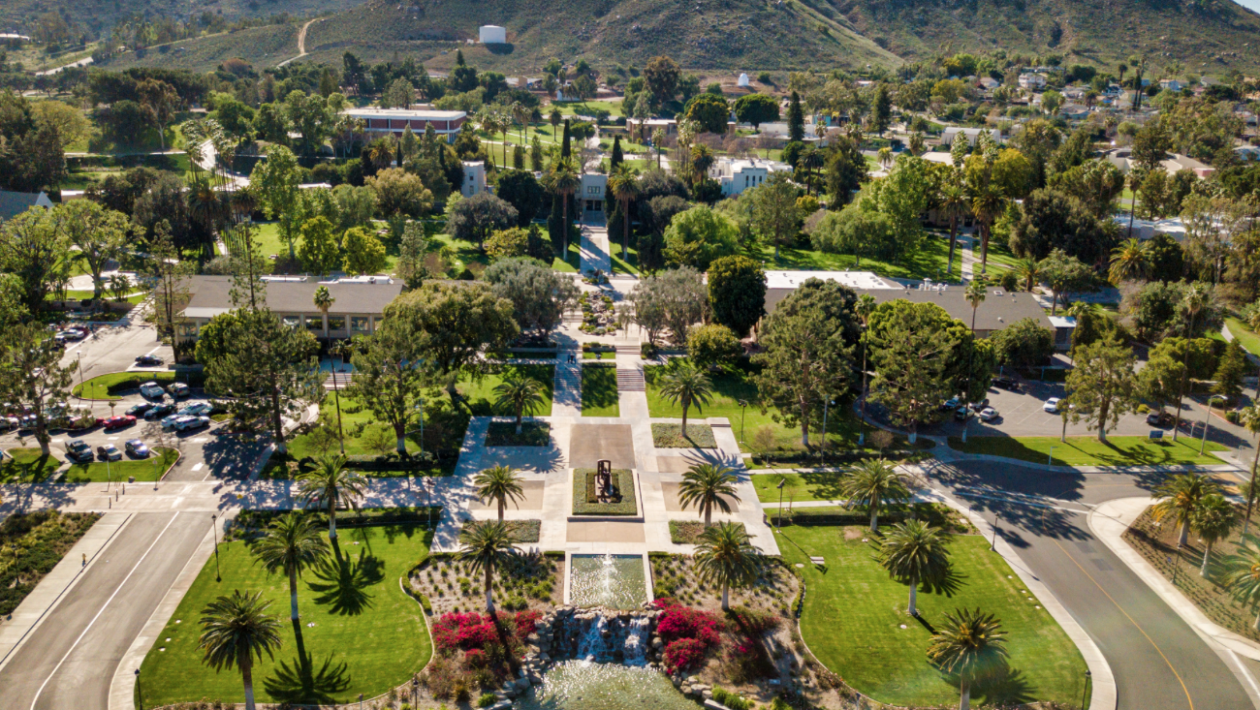
When I arrived at La Sierra University, the former farm had been closed, and the agriculture major had been discontinued. We had hundreds of acres of farmland that required us to keep the weeds down. I determined to turn this unproductive asset into a productive one. We built a brand-new highway through the former farm that we called Riverwalk Parkway with water, plantings, trees, and so on—a beautiful thing. We sold some of the land that we didn’t need. We leased all the land immediately around us. That lease was to come back to the university in 90 years, and my successors will have the opportunity to either continue the lease or, since there are lots of apartment buildings on those properties, we could use those apartments ourselves. The lease included 10% of all the rent; we get a revenue of $2 million yearly just from that.
When I arrived on campus, we were $8 million in debt. And when I left, we had a $100 million endowment from this Riverwalk Project. That has given the university financial stability in the last 20 years that it otherwise would not have had. There have been some lean years when that endowment has been very important for the university.
So, I suppose that as I look back on my years, it’s that Riverwalk Project, the endowment for the university, that solidified the future of the university. At least, that’s one of the significant accomplishments.
JACL: God has blessed you tremendously.
LG: And, of course, I have to hasten to say that one person does not do those things alone. I’ve had a good team and a supportive board of trustees. I’ve had good community partners that have supported our growth and what we’ve done. It was a team effort and, as you say, God blessed those efforts.
JACL: We know it takes leadership for it to happen. It’s a team effort, but it needs vision and leadership.
LG: That does make a difference.
JACL: One last question before we close. If you were to give three pieces of advice to a new president, what would you say?
LG: Without considering your question ahead of time, here are three essential things:
First, you have to have a clear vision and commitment to what you’re there for. What’s my purpose at this institution? What’s my job? What have I been called here to do? What is job number one?
Second, don’t deplete your physical and spiritual energies to the detriment of your physical and spiritual health. If you’re going to function well in the job to which you’ve been called, you have to be fair to your body and mind—both physically and spiritually.
Third is to be constantly growing in your knowledge and ability, surveying what’s going on in your environment—in your church environment, in your political climate, in your educational background—so that you’re in touch with reality. Watch for the opportunities to learn the latest, to know what’s important about your job.
JACL: Thank you, Larry. It’s been a pleasure to speak with you today.
Lawrence (Larry) Geraty, PhD, is a church pastor, archeologist, history professor, educational leader, and Fulbright Fellow. He earned academic degrees from Pacific Union College, Andrews University, and Harvard University. Born overseas to missionary parents, he grew up in China, Myanmar, and Hong Kong. After working as church pastor in California and serving as a professor at the Andrews University Theological Seminary in Michigan, he became president of Atlantic Union College (AUC) in South Lancaster, Massachusetts (1985–1993), before being elected president of La Sierra University (LSU) in California (1993–2007). He currently serves as president emeritus and executive director of the foundation at La Sierra University.
Bordes Henry Saturné, PhD, currently serves as chair of the Andrews University School of Leadership in Berrien Springs, Michigan. An ordained minister, he served in New York as a church pastor, school principal, and conference superintendent of schools. He was vice president of Atlantic Union College in Massachusetts and vice president of Asia-Pacific International University in Thailand. He is a New York state certified school district administrator. His research interests focus on leadership development and the challenges and opportunities unique to faith-based educational institutions.
Image courtesy of the North American Division website.