

Abstract: This article seeks to bridge the gap between theology research and leadership modeling by offering a nuanced perspective on how the competency of spiritual influence from a Christian viewpoint is rooted in both disciplines and enhances leadership practice. By conducting a comprehensive analysis of spirituality definitions and prevalent leadership models, this study identifies four underlying elements that define the concept of spiritual influence: spiritual life, a higher sense of purpose, sensitivity to divine guidance, and a commitment to diakonia. The study advocates for a paradigm shift that promotes an interdisciplinary approach to recognizing spiritual influence as an essential component of leadership models across faiths and sectors.
As we confront increasingly complex global challenges, the urgent need for leaders who can inspire and guide with a sense of higher purpose becomes evident, highlighting the inherent power of influence in leadership to shape individuals’ thoughts, actions, and experiences (Lunenburg, 2012). An effective approach to addressing the complexities of leadership involves pursuing interdisciplinary solutions, particularly by cultivating a mutually enriching relationship between leadership and practical theology (Stanton, 2019). This integration can enhance understanding and practice within both fields, contributing to more nuanced and effective leadership strategies.
When leadership intersects with practical theology a form of influence arises where leadership modeling is framed around spiritual attributes (Rojas, 2024). Despite its profound effects, this infusion of spiritual dynamics often receives minimal attention in leadership frameworks (Payne, 2010). Many modern corporate settings—and even some Church settings—tend to focus more on metrics, efficiency, social, and task-driven approaches rather than acknowledging the intangible qualities that spiritual influence brings. Consequently, the significance of spirituality as a means of influence in leadership is frequently underestimated or disregarded, seen as irrelevant or conflicting with practical needs. This marginalization of spiritual influence restricts the potential for a more comprehensive understanding of leadership practices (Leclerc & Pabico 2023).
Spiritual influence has long been a silent yet potent force weaving across disciplines (Hoppe, 2005). This form of influence plays a vital role in shaping leaders who inspire, guide, and transform their followers (Pruzan, 2013). Spirituality in leadership involves cultivating a sense of purpose, integrity, empathy, and connections, which are transformational and transcend mere transactional interactions (Reave, 2005). To this effect, Wolfteich (2009) is emphatic on practical theology’s role in promoting spiritual studies: “Practical theology, if it is to be theology, must attend to spirituality and must develop methods appropriate to that subject matter” (p.122). Whether through the most prevalent leadership models, be it visionary leadership, servant leadership, or transformational leadership to mention a few, spiritual outcomes are evident in leaders who embrace their attributes (Kim, 2018). Some of these outcomes include increased organizational commitment, enhanced employee well-being, a stronger sense of community and collaboration, improved ethical decision-making, and the promotion of a shared sense of purpose among team members.
It is essential to recognize and validate the significance of spiritual influence in leadership (Reave, 2005). Such acknowledgment can enhance our understanding of leadership dynamics and the diverse factors contributing to improved leadership practices. Spiritual influence is an intrinsic element of leadership modeling. Its suppression in secular and commercial settings undermines its potential to foster more humane and effective leadership practices (Blackaby & Blackaby, 2011). Concurrently, spiritual influence research is minimally addressed in practical theology, limiting its potential to reach out and enhance leadership practices (Van der Ven & Van der Ven, 1988). By acknowledging spiritual influence, leadership modeling can be enriched by embracing a deeper understanding of leader practice. As we face increasingly complex global challenges, the need for leaders who can inspire and guide with a sense of higher purpose has never been more urgent. Integrating spiritual influence into leadership models can unlock new dimensions of growth and fulfillment, creating environments where both leaders and communities can thrive.
What follows in the next section is an effort to undertake a comprehensive exploration of the multifaceted concept of spirituality, beginning with an analysis of various definitions from different disciplines that capture its essence while demonstrating its elusiveness. It then examines a sample of leadership models, highlighting the underlying spiritual values and behaviors they implicitly embody. Finally, the discussion culminates with an investigation into spiritual influence, illustrated through specific cases where its impact is particularly pronounced and warranted.
Definitions of Spirituality
Effective leadership is multidisciplinary, encompassing principles from sociology, psychology, and theology research (Burke 2006). Here, the conversation between spirituality and leadership in theology is gradually emerging (Wolfteich, 2009), whereas other disciplines, such as business, are progressing at a faster pace (Mukherjee, Bhattacharjee, & Singha, 2016). This accelerated pace of spiritual leadership is driven by various factors, such as a reaction to secularization in the workplace (Alexis, 2012; Heelas, 2006), increased emphasis on employee well-being (Garg, 2017), and heightened sensitivities to ethical standards (Alvi, et al., 2024).
Unfortunately, when reviewing a wide range of scholarly literature regarding definitions of spirituality in Christianity, it seems there are as many definitions as there are researchers publishing on the topic (Bregman, 2004; McCarroll, et al., 2005). Analyzing spirituality assessment scales is one way to demonstrate the fragmentation within this concept. To demonstrate this fragmentation, Fornaciari, et al., (2005) discuss 65 spirituality assessment scales available from 1999 to 2004, and Monod, et al., (2011) looked at an additional 35 scales. From a Catholic perspective, only two instruments stand out within the literature: one measuring Franciscan spirituality (Büssing, et al., 2017) and another instrument designed for seminary use (Hoesing & Hogan 2021). Furthermore, Büssing (2018) published an extensive collection of scholarly articles presenting an in-depth look at twelve instruments. This diverse range of spirituality assessment tools makes it difficult for researchers to find a common framework that allows studies to build upon one another in a unified direction despite academic distinctions.
This lack of uniformity in definitions and constructs complicates the comparison and synthesis of findings, hindering the ability to build a robust body of knowledge. It’s also possible that differing definitions can cause misunderstandings and misinterpretations, reducing the clarity and reliability of research outcomes across disciplines. The focus of these definitions seems confined to the interests of the discipline and the approach used by the researcher within that discipline (Ratnakar & Nair 2012). A review of select definitions from multiple disciplines further illustrates the elusiveness of defining spirituality (Table 1).
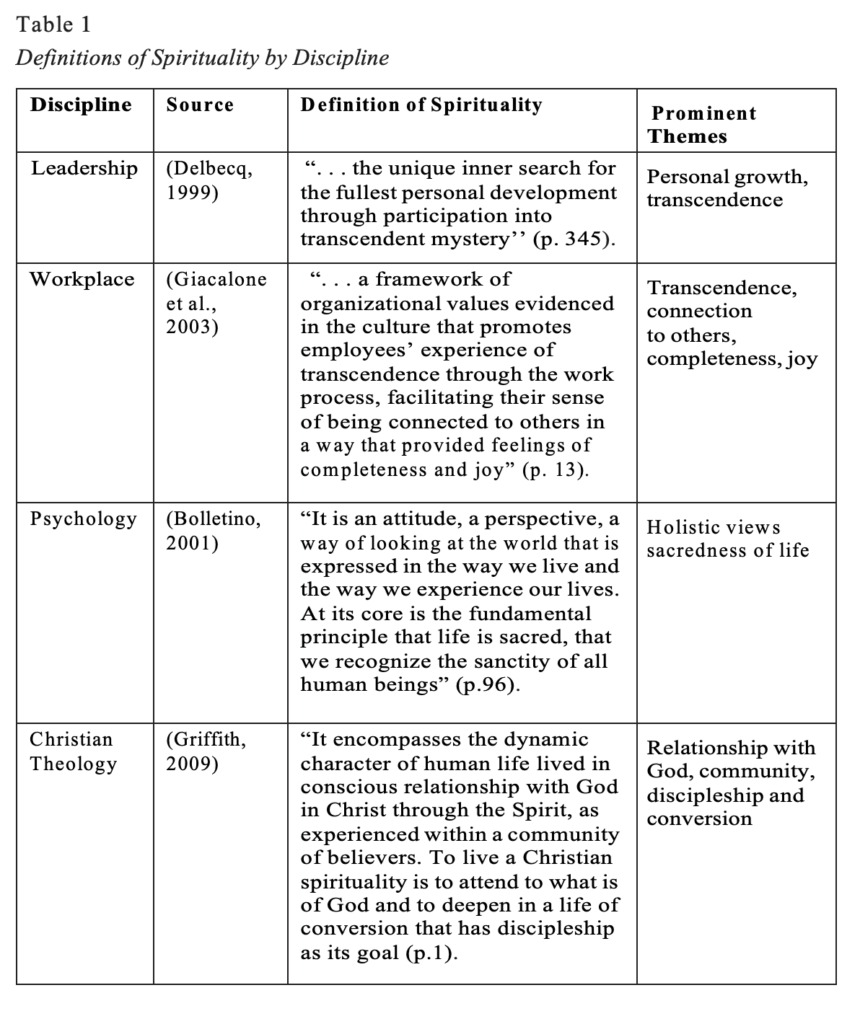
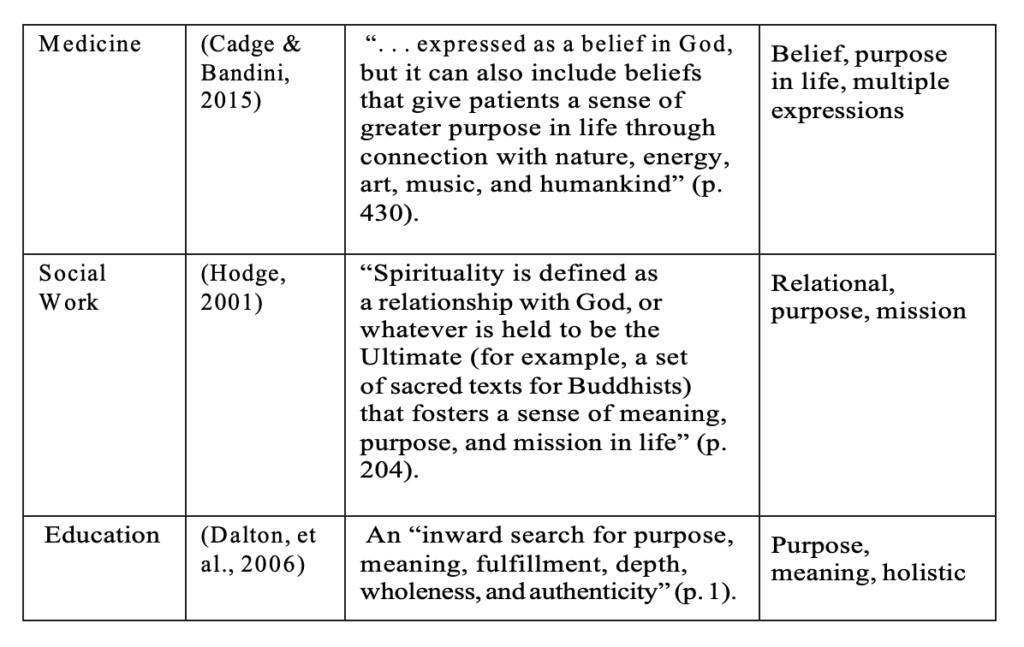
These definitions share four key elements. First, they emphasize the unique inner search for personal growth and the fullest development of one’s potential. Second, they describe an experience of transcendence, going beyond the ordinary to connect with something greater than oneself. Third, they describe both a religious and a non-religious phenomenon. Fourth, they are rooted in a relationship with God or religious practices, while in others, broader beliefs and community provide a holistic attitude without necessarily being tied to a specific religious tradition.
The selection of Griffith’s (2009) and Delbecq’s (1999) definitions of spirituality in Table 1 are of interest to this paper because they have value given that they are representative of their respective disciplines. The Griffith (2009) definition is explicitly rooted in the Christian tradition, emphasizing a dynamic and conscious relationship with God in Christ through the Holy Spirit. In contrast, the Delbecq (1999) definition presents spirituality as a broader, more inclusive concept, not confined to any single religious tradition. As a theological contribution to the leadership discipline, it describes spirituality as a unique inner search for the fullest personal development, achieved through participation in a transcendent mystery. Unlike the Griffith (2009) definition, this view of spirituality places less emphasis on communal aspects and more on individual exploration and self-discovery. One presents a broad, individualized understanding of spirituality, open to diverse interpretations and experiences, while the other offers a structured, communal, and theologically specific view of Christian spirituality.
The selection of a Christian worldview of spirituality for this study is particularly justified given its predominance in Western societies, where it has historically shaped cultural, moral, and social frameworks. This worldview offers a rich spiritual heritage that has influenced art, literature, law, and ethics, providing a cohesive narrative that resonates with many individuals’ experiences and identities. Furthermore, the Christian emphasis on community, compassion, and service aligns with the values of many Western societies, promoting social cohesion and ethical behavior.
From this worldview, the term “spirituality” refers to the dynamic nature of human existence (Cupit, 2009) that is lived out in a deliberate relationship with God in Christ through the Spirit (Baraza, 2017) as experienced and achieved within a community of believers (Hill, 2000). Spirituality is the personal and communitarian responsiveness to what is of God with the goal of more profound purposefulness, conversion, and discipleship. From Table 1, the preferred definition of spirituality for this article is offered by Griffith (2009). In a more complete form:
“. . . spirituality gets traced back to the letters of Paul in which he uses the Greek term pneuma to signal a life lived in alignment with God’s Spirit. Christian spirituality presumes, through God’s grace, a human desire and capacity for growing in union with the Triune God. It encompasses the dynamic character of human life lived in conscious relationship with God in Christ through the Spirit, as experienced within a community of believers. To live a Christian spirituality is to attend to what is of God and to deepen in a life of conversion that has discipleship as its goal (Griffith, Spring, 2009, p.1).
Spirituality in Leadership Models
Leadership is a spiritual practice because it encompasses a deliberate and structured approach to exploring and nurturing the deeper relationships of human existence and the divine. The connection between leadership and spirituality is profoundly entrenched in historical and contemporary contexts (Bindlish, et al., 2012). For instance, grace, in a spiritual sense, refers to an unmerited favor and a quality of kindness and compassion from the divine that transcends mere transactional interactions and, when applied to leadership, suggests a style that prioritizes empathy, integrity, and ethical behavior, underscoring the importance of moral character in effective leadership. Leadership is considered a “spiritual practice” (Rojas, 2024), and grace is therefore at the heart of leadership (McEvoy, 2010). Unlike a mere set of beliefs or a theoretical framework, spirituality involves intentional actions and routines designed to cultivate a holistic connection with oneself, others, and the transcendent.
The leadership and business academic disciplines often hesitate to fully embrace the significance of spiritual influence due to a variety of factors rooted in traditional business practices and cultural norms. One key reason is the conventional separation of religious beliefs from professional environments, where spirituality is often viewed as a private matter that does not align with the secular, profit-driven nature of business (Gorzycki, 2019). Additionally, the fear of alienating diverse stakeholders who may hold different or no spiritual beliefs can lead organizations to avoid integrating spiritual concepts into their leadership practice (Ali, et al., 2022). There’s also a concern that spirituality might be perceived as unscientific or subjective, which can conflict with the emphasis on measurable outcomes and evidence-based decision-making in business (Yousaf & Dogar, 2022). Finally, the lack of a clear, universally accepted definition of spirituality within the business context makes it challenging to incorporate in a way that is both meaningful and practical (Jastrzębski, 2022). These factors create resistance to acknowledging the potential benefits that spiritual influence can bring to leadership and business, such as enhanced ethical decision-making, greater employee well-being, and a stronger sense of purpose.
The current context underscores the importance of incorporating the grace of God into leadership development (Mizell, 2022). This perspective highlights the potential for spiritual principles to inform and enhance leadership practices, particularly in navigating today’s complex challenges. Ironically, many leadership models, in one way or another, already exhibit spiritual attributes. Academic literature’s most prevalent leadership models inherently encompass spiritual values and behaviors, albeit implicitly, thus acknowledging a profound relationship between effective leadership and core spiritual principles (Ali & Zakay, 2018; Lean & Ganster, 2017; Fairholm, 2011). Table 2 presents an assortment of 14 leadership models, their definitions, and the spiritual values or behaviors they embody.
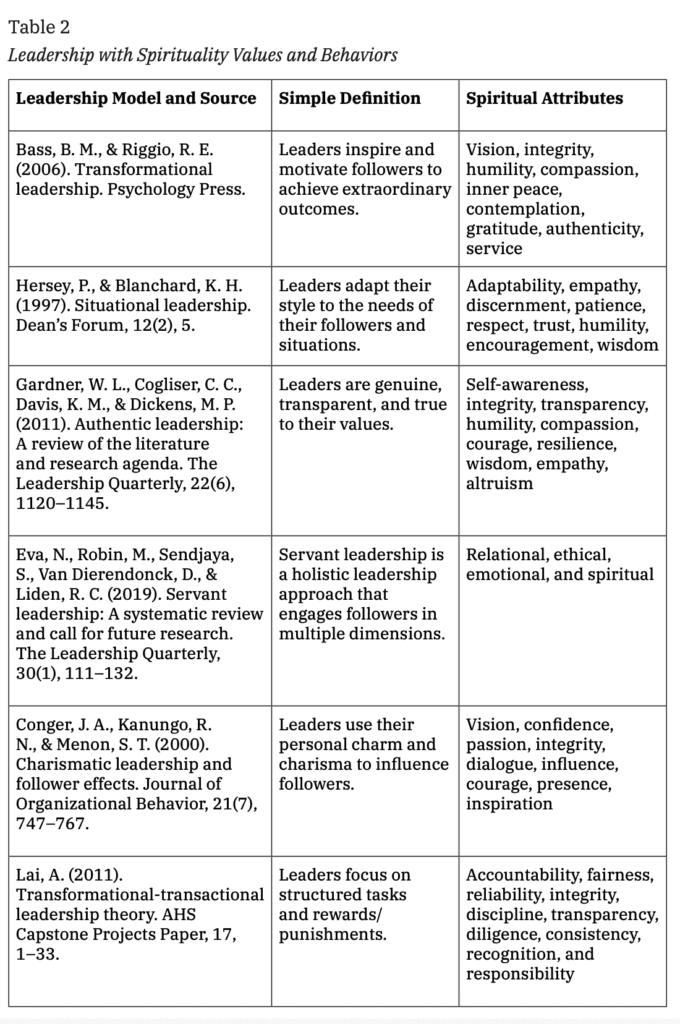
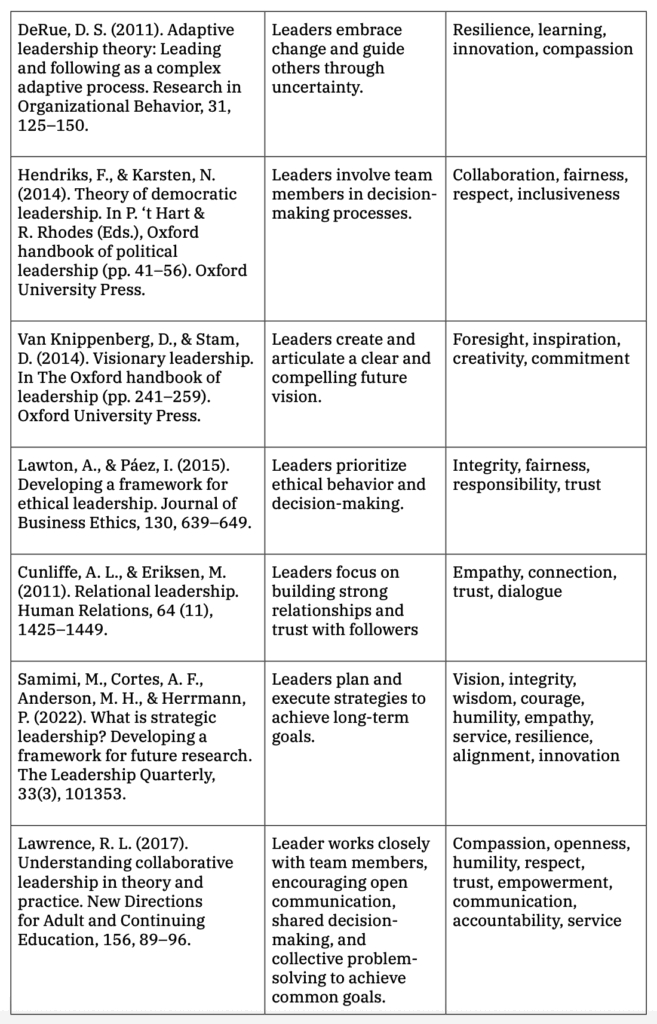
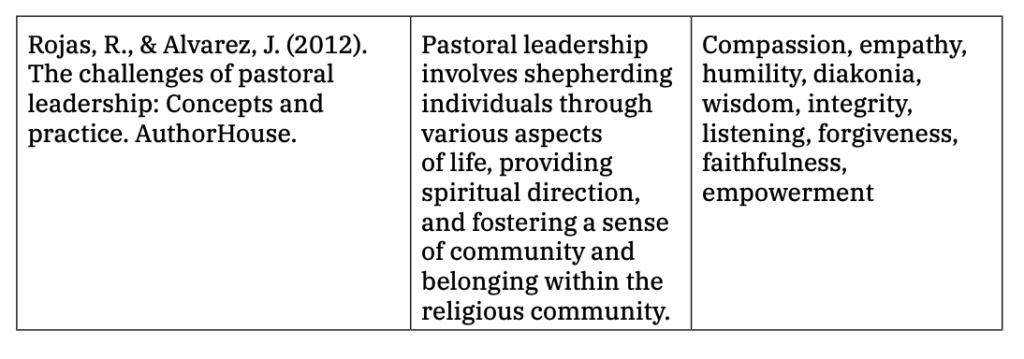
Table 2 provides evidence that leadership models are tacitly grounded in spiritual values and behaviors, which collectively enhance leaders’ capacity to inspire, guide, and connect with their followers. The common themes across these statements are integrity and ethical values, compassion and empathy, vision and inspiration, resilience and adaptability, collaboration, and inclusiveness. Overall, these themes underscore an approach to leadership, personal development, and community guidance that balances inner values with outward actions in relation to the transcendent. This alignment suggests an inherent interdisciplinary connection, where spirituality studies can significantly illuminate the spiritual dimensions of leadership, while leadership, in turn, offers important perspectives that enrich spiritual studies.
Many leadership models inherently elicit values that are spiritual in nature, reflecting a deeper desire for understanding of human motivations and ethical considerations. These models often emphasize principles such as integrity, empathy, service, and community, which align closely with spiritual values found in various cultural and religious traditions. Discussing spiritual values in leadership models opens avenues for interdisciplinary approaches, combining insights from fields such as psychology, sociology, theology, and organizational behavior. For example, psychological research on emotional intelligence highlights how self-awareness and empathy, key components of effective leadership, can be developed through spiritual practices such as mindfulness and reflection. By integrating these concepts, organizations can cultivate leaders who are not only skillful in managing tasks but also adept at understanding and responding to the emotional and spiritual needs of their teams. Recognizing that leadership does not exist in a vacuum, interdisciplinary approaches can explore how cultural, social, and spiritual contexts shape leadership behaviors and values. For instance, by examining leadership through the lens of community engagement and social responsibility, organizations can promote spiritual values by encouraging individuals and organizations to act with compassion, empathy, and a sense of interconnectedness, cultivating a commitment to serve others and contribute to the greater good within their communities.
The integration of spiritual values into leadership models also invites insights from theological studies, which can provide a rich context for understanding the moral and ethical implications of leadership practices. This interdisciplinary dialogue can enhance the development of frameworks that not only prioritize organizational outcomes but also promote the spiritual and ethical growth of individuals within the organization. The intrinsic spiritual values embedded in many leadership models highlight the potential for interdisciplinary approaches that deepen our understanding of effective leadership. By integrating insights from diverse fields, organizations can develop more holistic leadership practices that acknowledge spirituality as a significant influence in leadership dynamics that not only drive performance but also create a compassionate and ethical workplace environment. This synergy between leadership and spirituality ultimately leads to more resilient organizations that are capable of navigating the complexities of modern challenges while remaining grounded in core human values.
Spiritual Influence
Leadership is fundamentally about the ability to influence others, shaping their behaviors, attitudes, and decisions to achieve desired outcomes (Oc & Bashshur, 2013). This influence is not confined to a single method or approach but rather encompasses a diverse array of strategies that leaders employ depending on the situation, the individuals involved, and the goals they seek to achieve. Whether through direct persuasion, modeling desired behaviors, fostering a shared vision, or leveraging positional authority, leaders have a rich portfolio of influence tactics at their disposal. These various forms of influence allow leaders to adapt their approach to the unique dynamics of their teams and organizations, ensuring that they can effectively guide and inspire others in a way that resonates with their values and objectives. Table 3 provides a detailed overview of these different forms of influence, highlighting the range of options available to leaders as they navigate the complexities of guiding and motivating others in diverse contexts.
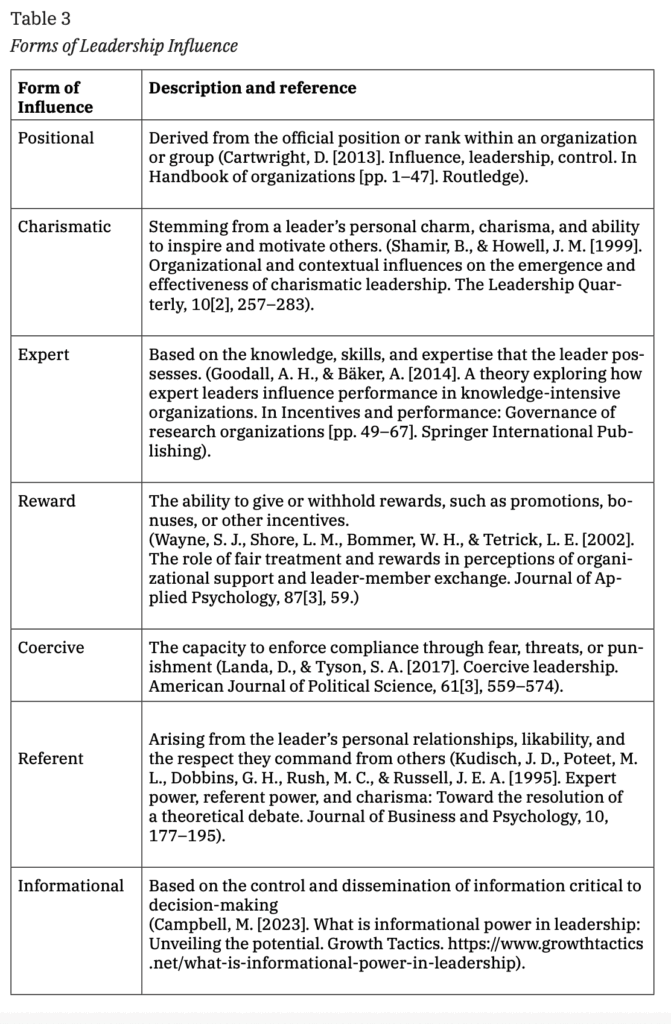
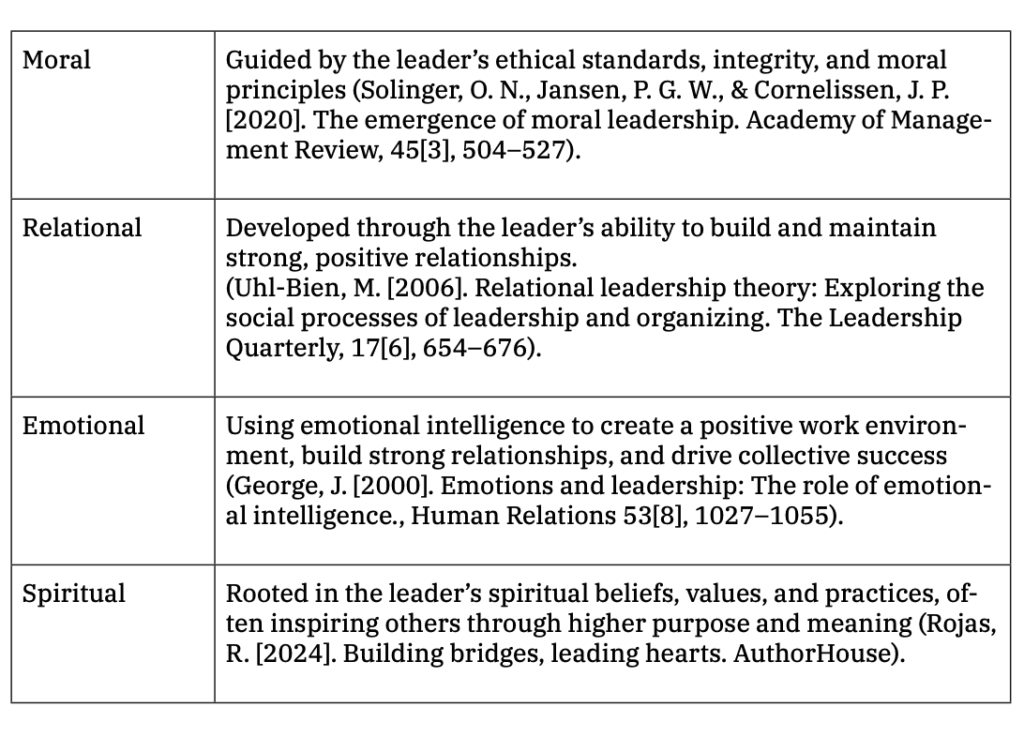
The role of spiritual influence in leadership is significant, serving as a common thread that informs leaders’ roles and responsibilities (Rojas, 2024). This perspective suggests that spiritual principles can provide valuable insights into ethical decision-making and relational dynamics within leadership contexts. Understanding this influence can help leaders navigate their responsibilities more effectively and create a positive organizational culture. Unlike other forms of leader influence (Krause, 2004), spiritual influence uniquely emphasizes a deep connection with inner values, purpose, and higher principles. While other influences may focus on tangible gains or external validation, spiritual influence guides individuals toward inner peace, personal growth, and a relationship with the divine (Houston & Sokolow, 2006). It provides direction, resilience in adversity, and a profound understanding of interconnectedness beyond the material realm. Spiritual influence transcends fleeting desires, offering a perspective that profoundly enriches lives (Haight, 2014).
In a leadership context, spiritual influence involves instilling a leader’s spiritual beliefs, values, and practices into their leadership style (Phillips, 2012). This is achieved by infusing their approach with (a) a well-grounded spiritual life (Cowan, 2010), (b) a higher sense of purpose (Fry & Egel, 2016), (c) sensitivity to divine guidance (Stadler, 2008), and (d) a commitment to diakonia (Ver Elst, 2020). Diakonia—the spiritual practice of selfless service (Ver Elst, 2020)—enhances this form of influence by translating love into tangible actions that address the community’s practical, emotional, and spiritual needs (Nordstokke, 2014). Diakonia refers specifically to service motivated by spiritual beliefs and a commitment to communal well-being within a religious context, and is different than altruism, which encompasses selfless concern for the welfare of others driven by moral or ethical principles, regardless of religious affiliation. These four elements of a spiritual influencer in the Church create a tapestry of faith, selfless service, and community, strengthening the Church’s spiritual fabric.
Adopting a competency approach to spiritual leadership represents an improvement over a modeling approach by emphasizing the development of specific skills and attributes that leaders can cultivate to enhance their effectiveness in diverse contexts. While modeling approaches often rely on predefined frameworks or archetypes of leadership (Popper & Mayseles, 2007), which may not account for the complexities of real-world situations, a competency-based approach allows for a more nuanced understanding of spiritual leadership.
The competency approach recognizes that spiritual leadership is not confined to a single style or model but is instead comprised of a range of competencies—such as empathy, ethical decision-making, and the ability to inspire and motivate others (Rojas, 2024). By focusing on these competencies, leaders can adapt their behaviors to meet the unique needs of their teams and organizations, cultivating an environment in which spiritual values can thrive. For example, a leader who cultivates emotional intelligence can better navigate interpersonal relationships and create a supportive atmosphere that aligns with spiritual principles.
Additionally, a competency-based approach promotes continuous personal and professional development, encouraging leaders to reflect on their practices and seek improvements within their organizations over time. This ongoing growth aligns with the essential tenets of spiritual leadership, which emphasize authenticity, self-awareness, and a commitment to serving others. By prioritizing competencies along with models, organizations can cultivate leaders who are not only capable of addressing immediate challenges but are also equipped to inspire long-term positive change and encourage a culture rooted in spiritual values. Thus, a competency approach enhances the adaptability and relevance of spiritual leadership in today’s rapidly changing and diverse environments.
It’s also worth mentioning that spiritual influence as a competency is also intricately connected to other leadership core competencies such as calling, character strength, relational skills, pastoral sensitivity, nurturing community, and providential guidance (Rojas, 2024). A sense of calling often emerges from spiritual convictions, providing individuals with a profound purpose that aligns with their spiritual beliefs, driving them to pursue their mission with dedication and passion (Cashman, 2008). Character strength is bolstered by spiritual practices emphasizing virtues like integrity, humility, and resilience, serving as a moral compass that guides individuals in maintaining consistency between their beliefs and actions (Bennis, 1998; Sarros & Cooper, 2006). Relational skills are enhanced through spiritual teachings prioritizing love, compassion, and empathy, advancing deep and meaningful connections with others (Weymes, 2002). Pastoral sensitivity is shaped by spiritual awareness, enabling individuals to provide care and guidance that is attuned to the spiritual and emotional needs of others grounded in empathy and discernment (Hancock, 2018). The nurturing community competency is supported by shared spiritual values that promote inclusivity, mutual support, and collective responsibility, creating environments where individuals feel valued and connected (Blackaby & Blackaby, 2011). Lastly, providential guidance reflects a trust in divine influence, allowing individuals to navigate life’s uncertainties with faith, aligning their decisions with a higher purpose or spiritual direction (Rojas, 2022). Together, spiritual influence is deeply connected and enriched by the interplay of these competencies.
While spiritual influence holds sway over individuals and communities alike, its effect can be particularly pronounced in certain situations. Here are nine specific situations where a leader can effectively apply spiritual influence within the community or group entrusted to them: Community celebrations and gatherings, crisis intervention, community service and outreach programs, educational and discipleship initiatives, conflict resolution and reconciliation, strategy formulation, decision-making (discernment), personal growth and development, cultural activities, and ethical initiatives.
Leaders who subscribe to any leadership model increase their chances of effectiveness when adding spiritual influence to their portfolio. By integrating their spiritual beliefs, values, and practices into their leadership approach, they cultivate a deeper connection with their purpose, God’s plans, and the people they serve selflessly. This spiritual alignment—along with other forms of influence—not only enriches the leader’s personal growth but also inspires and transforms the community, leading to more profound and lasting positive change. Noted, however, that its impact may be more subdued in environments where spirituality is marginalized or met with skepticism. By understanding these nuances, leaders can strategically apply spiritual influence where it can resonate most deeply and effect meaningful transformation.
Summary and Conclusion
At the intersection of theology, spirituality studies, and leadership, encountering the terms “grace” and “leadership” together in a single sentence is a rare occurrence. This rarity underscores a critical gap in the discourse around the overall development of leadership practice.
For theology and spiritual studies to contribute to developing effective pastoral and ministry leaders, appropriate experiences from the leadership discipline need to be drawn. Leaders across all disciplines depend on a portfolio of influences to exercise their role, and one of the forms of influence available to them is spiritual influence. Although a silent yet powerful source of authority (Hoppe, 2005), spiritual influence remains an underlying ingredient in most leadership models that inspire, guide, and transform their followers (Pruzan, 2013).
A significant implication of this study is the recommendation for a multidisciplinary approach to leadership, particularly emphasizing the integration of leadership studies with the subfields of theology. In the intersection of spiritual studies and leadership, spiritual influence encompasses the integration of a leader’s spiritual beliefs, values, and practices into their leadership approach (Phillips, 2012). This integration is defined by four essential elements: a profoundly rooted spiritual life (Cowan, 2010), a heightened sense of purpose (Fry, 2016), an attunement to divine guidance (Stadler, 2008), and a commitment to diakonia—the spiritual practice of selfless service (Ver Elst, 2020). Diakonia significantly enhances spiritual influence by translating love into concrete actions that effectively address a community’s practical, emotional, and spiritual needs (Nordstokke, 2014).
This study presents several limitations that merit careful consideration. First, it predominantly emphasizes a Christian worldview while not sufficiently exploring the spiritual influences present in alternative perspectives. Second, the findings are primarily theoretical and, as such, are open to interpretation. Third, there is an absence of empirical validation regarding the effectiveness of leadership models that integrate spiritual influences. Fourth, the relationship between this analysis and emerging leadership models remains ambiguous; future research should examine how these newer models intersect with spirituality. Finally, cultural factors were not addressed within the scope of this analysis, potentially limiting the generalizability of the findings across diverse contexts.
The significance of spiritual influence cannot be overstated, as it is a common element that shapes a leaders’ roles and responsibilities (Rojas & Alvarez, 2012). Mizell (2022) poignantly notes that if there has ever been a time when the world desperately needs the grace of God in cultivating leaders, it is now. Integrating grace into leadership practices can foster a more compassionate, ethical, and valuable approach to guiding communities and organizations in an era marked by complex challenges and unprecedented changes. It is high time to recognize and validate the importance of spiritual influence in leadership (Reave, 2005) and the potential contribution of spiritual studies to this interdisciplinary discourse.
Dr. Ronald R. Rojas, DBA, is adjunct faculty in the School of Parish Leadership and Evangelization at the University of St. Mary of the Lake, Mundelein, IL.
References
Alexis, G. Y. (2012). Not Christian, but Nonetheless Qualified: The Secular Workplace—Whose Hardship? Journal of Religion and Business Ethics, 3(1), 1. https:// via.library.depaul.edu/jrbe/vol3/iss1/1
Ali, Z., & Zaky, M. (2018). Spiritual values and spiritual practices: Interactive effects on leadership effectiveness. Etikonomi, 17(1), 123–134. https://doi.org/10.15408/ etk.v17i1.6497
Ali, M., Usman, M., Soetan, G. T., Saeed, M., & Rofcanin, Y. (2022). Spiritual leadership and work alienation: analysis of mechanisms and constraints. The Service Industries Journal, 42(11–12), 897–918. https://doi.org/10.1080/02642069.2022.2026333
Alvi, T. H., Tariq, S., Atif, M. M., Ozturk, I., & Saeed, M. (2024). Spirit at work: A panacea for ethical problems caused by marketing managers’ love of money. Journal of Asia Business Studies, 18(6), 1647–1667. https://doi.org/10.1108/JABS-01-2024-0035
Baraza, P. A. (2017). The need for deliberate spiritual formation for children living with global developmental delays. International Journal of Contemporary Research and Review, 8(12), 20347–20355.
Bennis, W. (1998). The character of leadership. In M. Josephson & W. Hanson (Eds.), The power of character: Prominent Americans talk about life, family, work, values, and more (pp. 1–20). Jossey-Bass.
Bindlish, P., Dutt, P., & Pardasani, R. (2012). From growing convergence of spirituality and leadership towards a unified leadership theory. Journal of Spirituality, Leadership and Management, 6(1), 3–23. http://dx.doi.org/10.15183/slm2012.06.1112
Blackaby, H. T., & Blackaby, R. (2011). Spiritual leadership: Moving people on to God’s agenda. B&H Publishing Group.
Bolletino, R. C. (2001). A model of spirituality for psychotherapy and other fields of mind–body medicine. Advances in Mind-Body Medicine, 17(2), 90–107. https://psycnet.apa.org/record/2001-17351-001
Bregman, L. (2004). Defining spirituality: Multiple uses and murky meanings of an incredibly popular term. Journal of Pastoral Care & Counseling, 58(3), 157–167. https://doi.org/10.1177/154230500405800301
Burke, R. (2006). Leadership and spirituality. Foresight, 8(6), 14–25. https://doi.org/10.1108/14636680610712504
Büssing, A., Warode, M., Gerundt, M., & Dienberg, T. (2017). Validation of a novel instrument to measure elements of Franciscan-inspired spirituality in a general population and in religious persons. Religions, 8(9), 197. https://doi.org/10.3390/ rel8090197
Büssing, A. (2018). Measures of spirituality/religiosity. MDPI.
Cadge, W., & Bandini, J. (2015). The evolution of spiritual assessment tools in healthcare. Society, 52(5), 430–437. https://doi.org/10.1007/s12115-015-9926-y
Cashman, K. (2008). Leadership from the inside out. Barrett-Koehler.
Cowan, D. A. (2010). Embedded spirituality as a leadership foundation for sustainable innovative learning. ReVision, 30(3), 89–97.
Cupit, G. (2009). The dynamics of spiritual development. In M. De Sousa, L. J. Francis,
J. O’Higgins, & D. Scott (Eds.), International handbook of education for spirituality, care and wellbeing (pp. 291–309). Springer.
Dalton, J. C., Eberhardt, D., Bracken, J., & Echols, K. (2006). Inward journeys: Forms and patterns of college student spirituality. Journal of College and Character, 7(8), 1–22. https://doi.org/10.2202/1940-1639.1219
Delbecq, A. L. (1999). Christian spirituality and contemporary business leadership. Journal of Organizational Change Management, 12(4), 345–354. https://doi.org/10.1108/09534819910282180
Elst, D. V. (2020). A powerful encounter: The relation between diaconia and spirituality. Acta Theologica, 40(2), 342–359. https://doi.org/10.18820/23099089/actat.v40i2.18
Fairholm, G. W. (2011). Real leadership: How spiritual values give leadership meaning. Bloomsbury Publishing.
Fornaciari, C. J., Sherlock, J. J., Ritchie, W. J., & Lund Dean, K. (2005). Scale development practices in the measurement of spirituality. International Journal of Organizational Analysis, 13(1), 28–49. https://doi.org/10.1108/eb028996
Frank, T. E. (2006). Leadership and administration: An emerging field in practical theology. International Journal of Practical Theology, 10(1), 113–136. https://doi.org/10.1515/IJPT.2006.009
Fry, L. W., & Egel, E. (2016). Spiritual leadership. In A. Farazmand (Ed.), Global encyclopedia of public administration, public policy, and governance (pp. 1–6). Springer. https:// doi.org/10.1007/978-3-319-31816-5_2353-1
Garg, N. (2017). Workplace spirituality and employee well-being: An empirical exploration. Journal of Human Values, 23(2), 129–147. https://doi.org/10.1177/0971685816689741
Giacalone, R. A., & Jurkiewicz, C. L. (2003). Toward a science of workplace spirituality. In Handbook of workplace spirituality and organizational performance (pp. 1–12). Sharpe Armonk.
Gräb, W. (2014). Practical theology as a theory of lived religion: Conceptualizing church leadership. International Journal of Practical Theology, 18(1), 102–112. https://doi.org/10.1515/ijpt-2014-0008
Griffith, C. M. (2009). Catholic spirituality in practice. C21 Resources. Boston College. Gorzycki, M. (2019). God bless our cubicles: Sustaining spirituality in the workplace. Wipf & Stock Publishers.
Haight, R. (2014). Spirituality seeking theology. Orbis Books.
Hancock, A. T. (2018). Pastoral training approaches in the local church: A multi-case study (Doctoral dissertation). The Southern Baptist Theological Seminary. http://hdl.handle.net/10392/5460
Heelas, P. (2006). Challenging secularization theory: the growth of “New Age” spiritualities of life. Hedgehog Review, 8(1–2).
Hill, J. (2000). A rationale for the integration of spirituality into community psychology. Journal of Community Psychology, 28(2), 138–149.
Hodge, D. R. (2001). Spiritual assessment: A review of major qualitative methods and a new framework for assessing spirituality. Social Work, 46, 203–214. https://doi.org/ 10.1093/sw/46.3.203
Hoesing, P., & Hogan, E. (2021). You can’t measure that . . . can you? How a Catholic seminary approaches the question of measuring growth in human and spiritual formation. Journal of Spiritual Formation and Soul Care, 14(2), 254–275. https://doi.org/10.1177/19397909211040518
Hoppe, S. L. (2005). Spirituality and leadership. New Directions for Teaching and Learning, 104, 83–92. http://dx.doi.org/10.1002/tl.217
Houston, P. D., & Sokolow, S. L. (2006). The spiritual dimension of leadership: 8 key principles to leading more effectively. Corwin Press.
Huizing, R. (2011). Bringing Christ to the table of leadership: Moving towards a theology of leadership. Journal of Applied Christian Leadership, 5(2), 58–75. https://digitalcommons.andrews.edu/jacl/vol5/iss2/5
Jastrzębski, A. K. (2022). The challenging task of defining spirituality. Journal of Spirituality in Mental Health, 24(2), 113–131. https://doi.org/10.1080/19349637.20 20.1858734
Kim, M. (2018). The effects of authentic leadership on employees’ well-being and the role of relational cohesion. InTech. http://doi.org/10.5772/intechopen.76427
Krause, D. E. (2004). Influence-based leadership as a determinant of the inclination to innovate and of innovation-related behaviors: An empirical investigation. The Leadership Quarterly, 15(1), 79–102. https://doi.org/10.1016/j.leaqua.2003.12.006
Lean, E. R., & Ganster, D. C. (2017). Is there a common understanding of spiritual leader behaviors? Journal of Management, Spirituality, and Religion, 14(4), 295–317. https://doi.org/10.1080/14766086.2017.1315316
Leclerc, L., & Pabico, C. (2023). Blueprints for well-being: Modeling the way through human-centered leadership and pathway to excellence. Nursing Management, 54(4), 9–16. https://doi.org/10.1097/01.NUMA.0000921892.27917.78
Lunenburg, F. C. (2012). Power and leadership: An influence process. International Journal of Management, Business, and Administration, 15(1), 1–9. https://sid.ir/paper/ 621196/en
McCarroll, P., O’Connor, T., Meakes, E., Meier, A., O’Connor, T. S. J., & VanKatwyk, P. L. (2005). Assessing plurality in spirituality definitions. In A. Meier (Ed.), Spirituality and health: Multidisciplinary explorations (pp. 43–61). Wilfrid Laurier University Press.
McEvoy, K. (2010). Moments of grace: The heart of leadership. The Australasian Catholic Record, 87(4), 420–429. https://search.informit.org/doi/10.3316/informit.692420826539991
Mizzell, N. (2022). Grace for everyone. In R. I. Huizing (Ed.), Grace leadership: A biblical perspective of compassion in management (pp. 95–108). Palgrave Macmillan. https:// doi.org/10.1007/978-3-031-04488-5_6
Monod, S., Brennan, M., Rochat, E., Martin, E., Rochat, S., & Büla, C. J. (2011). Instruments measuring spirituality in clinical research: A systematic review. Journal of General Internal Medicine, 26, 1345–1357. https://doi.org/10.1007/s11606-011-1769-7
Mukherjee, S., Bhattacharjee, S., & Singha, S. (2016). Workplace spirituality: A paradigm shift to ethics from business. IOSR Journal of Business and Management, 11–15.
Nordstokke, K. (2014). The study of diakonia as an academic discipline. In S. Dietrich, K. Jørgensen, & K. Karsrud (Eds.), Diakonia as Christian social practice: An introduction (pp. 46–61). Regnum International Books.
Oc, B., & Bashshur, M. R. (2013). Followership, leadership, and social influence. The Leadership Quarterly, 24(6), 919–934. https://doi.org/10.1016/j.leaqua.2013.10.006
Payne, S. (2010). Leadership and spirituality: Business in the USA. International Journal of Leadership in Public Services, 6(2), 68–72. https://doi.org/10.5042/ijlps.2010.0355
Phipps, K. (2012). Spirituality and strategic leadership: The influence of spiritual beliefs on strategic decision-making. Journal of Business Ethics, 106(2), 177–189. https://www.jstor.org/stable/41426665
Popper, M., & Mayseless, O. (2007). The building blocks of leader development: A psychological conceptual framework. Leadership & Organization Development Journal, 28(7), 664–684. https://doi.org/10.1108/01437730710823905
Pruzan, P. (2013). Integrating rationality and spirituality in leadership. International Journal on Spirituality and Organization Leadership, 1(1), 33–46. https://doi.org/10.1177/21582440241252402
Ratnakar, R., & Nair, S. (2012). A review of scientific research on spirituality. Business Perspectives and Research, 1(1), 1–12. https://doi.org/10.1177/2278533720120101
Reave, L. (2005). Spiritual values and practices related to leadership effectiveness. The Leadership Quarterly, 16(5), 655–687. https://doi.org/10.1016/j.leaqua.2005.07.003
Rojas, R. R., & Alvarez, J. (2012). The challenges of pastoral leadership: Concepts and practice. AuthorHouse.
Rojas, R. R. (2022). Contextualizing faith-based leadership models: A competency approach to pastoral leadership. Practical Theology, 15(6), 555–568. https://doi.org/10.1080/1756073X.2022.2085234
Rojas, R. R. (2024). Building bridges, leading hearts. AuthorHouse.
Sarros, J. C., & Cooper, B. K. (2006). Building character: A leadership essential. Journal of Business and Psychology, 21(1), 1–22. https://doi.org/10.1007/s10869-005-9020-3
Stadler, A. G. (2008). Leadership development by divine design: An exploration of Christian leadership emergence theory in the corporate context (Publication No. 3340925 ) [Doctoral thesis, Regent University]. ProQuest Dissertations and Theses Global. https://www.proquest.com/pqdtglobal1/dissertations-theses/ leadership-development-divine-design-exploration/docview/231320621/ sem-2?accountid=158824
Stanton, G. D. (2019). A theology of complexity for Christian leadership in an uncertain future. Practical Theology, 12(2), 147–157. https://doi.org/10.1080/1756073X.2019.1595318
van der Ven, J.A., & Van Der Ven, J. A. (1988). Practical Theology: from Applied to Empirical Theology. Journal of Empirical Theology, 1(1), 7–27. https://doi.org/10.1163/157092588X00023
Ver Elst, D. (2020). A powerful encounter: the relation between diaconia and spirituality. Acta Theologica, 40(2), 342–359. https://doi.org/10.18820/23099089/actat.v40i2.18
Weymes, E. (2002). Relationships, not leadership, sustain successful organizations. Journal of Change Management, 3(4), 319–331. https://doi.org/10.1080/714023844
Wolfteich, C. (2009). Animating questions: Spirituality and practical theology. International Journal of Practical Theology, 13(1), 121–143. https://doi.org/10.1515/ IJPT.2009.7
Yousaf, U., & Dogar, M. N. (2022). Historical actualities of workplace spirituality. Indian Journal of Economics and Business, 21(2), 497–510.